
Reviewed · BLUE MOUNTAINS TOURS
Small-Group Weekend Rock Climbing Adventure from Katoomba
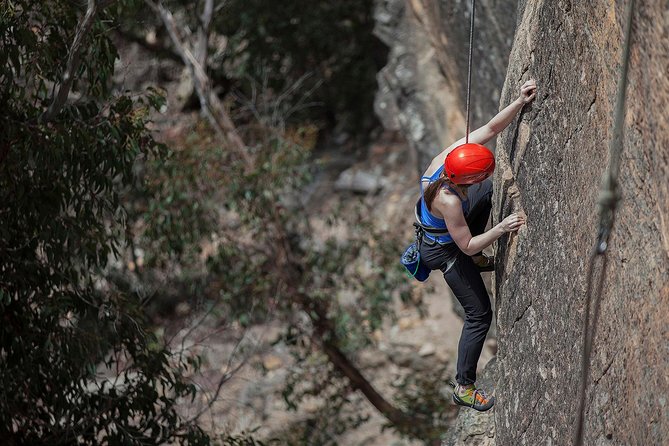
The best part of this two-day course is that you move from classroom-style instruction to real Blue Mountains rock on the first morning. You learn knots, belaying, abseiling, and safe movement, then put those skills to work on graded climbs instead of waiting until the end of the course.
I like the small-group format, capped at 15 people, and the fact that lunch, national park fees, shoes, harnesses, helmets, ropes, and technical gear are included. I also like the clear two-day progression: safety and basic skills first, then a full day devoted to climbing. The main consideration is that you need moderate fitness, a minimum age of 14 applies, and bad weather can change the plan.
Key points
- Real outdoor climbing from day one: Instruction quickly moves from safety drills to Blue Mountains rock.
- A useful indoor-to-outdoor bridge: You learn how outdoor ropes, anchors, holds, knots, and belaying differ from gym climbing.
- Two distinct course days: The first builds skills, while the second focuses on climbing as many varied routes as conditions and ability allow.
- Named instructors with strong reputations: Liam, Pedro, Scott, Zuza, and Lewis have all led courses for the provider, though your guide depends on the date.
- Almost everything is covered: Technical equipment, climbing shoes, lunch, national park fees, GST, and professional instruction are included.
- A practical next step: You should finish able to climb short, moderately graded rock routes with experienced leaders.
Starting at 8:45am in Katoomba
Your two days begin at the Paddy Pallin Adventure Center, 166 Katoomba Street, Katoomba, at 8:45am. You return to this meeting point at the end of the activity, so you do not need to arrange separate transport between climbing areas.
That simple meeting point is useful if you are staying in Katoomba. It is less convenient if you are based elsewhere in the Blue Mountains, since hotel pickup and drop-off are not included. Plan to arrive ready for an active day rather than expecting a slow start. The course departs in a vehicle and heads to the selected climbing area after the group meets.
The exact rock locations are not fixed in the information provided, which is sensible for an outdoor course. Guides need to match the site to weather, ability, and the day’s teaching goals. You can expect the Blue Mountains setting to be part of the experience, but the main focus is learning rather than sightseeing from a vehicle.
More canyoning and abseiling in the mountains:
- Full-Day Canyoning Experience at Stunning Empress Canyon
★ 5.0 · 87 reviews - Blue Mountains: Abseiling and Canyoning Experience
★ 4.8 · 69 reviews - Half-Day Abseiling Adventure in Blue Mountains National Park
★ 5.0 · 59 reviews
The first morning: safety before height
The opening part of the course deals with the skills that make outdoor climbing possible. You work through safety awareness, rope handling, knots, belay anchors, and correct belay technique before spending the rest of the day climbing.
This order matters. Indoor climbing can teach you how to move up a wall, but outdoor climbing adds rope systems, anchors, route decisions, rock texture, and communication between climber and belayer. A good introduction should make those parts feel manageable, and this course gives them proper attention before asking you to climb more varied routes.
You also learn the basics of abseiling. That gives the weekend a useful extra dimension, since outdoor climbing days may require you to descend by rope rather than simply walk back down or lower from an indoor wall. The course aims to teach you how to use modern abseiling and climbing equipment, not just how to put on a harness and follow a guide.
Expect instruction in:
- Safe movement on rock
- Efficient use of handholds and footholds
- Climbing equipment
- Rope handling
- Knot tying
- Belay anchors
- Correct belaying
- Abseiling
- Basic climbing technique
The teaching is practical. After the initial instruction, you move onto the rock and apply each skill. That balance is important because rope work makes more sense when you can see how it connects to an actual climb.
Graded climbs on the first day

The first day is not only a lesson. Instructors take you onto a selected group of graduated climbs, giving you a chance to use the techniques as your confidence builds.
Graduated routes are especially helpful for beginners. You are not expected to arrive with a full set of outdoor skills, and you should not be pushed straight onto a route that feels beyond your level. The course is designed for people with little or no outdoor climbing experience, as well as indoor climbers who want to make the change to real rock.
If you already climb at a gym, you may find the movement familiar but the surface different. Outdoor rock asks you to read natural holds and footholds rather than brightly marked indoor routes. The course specifically covers efficient use of holds, which helps you save energy and climb with more control.
The group size can reach 15 people. That is still a manageable number for a formal course, though your actual time on the rock will depend on the group and the number of instructors working that day. If you prefer more individual attention, the provider also offers personal training and private groups on selected dates.
Day two is for climbing
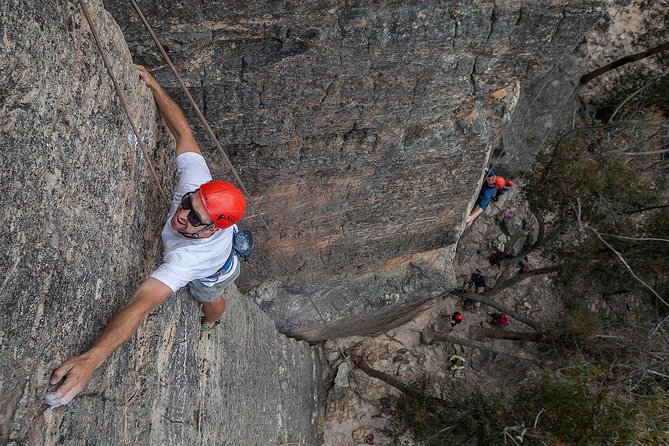
The second day shifts the balance from instruction to climbing. Your instructor aims to take you on as many varied climbs as possible, using each route to build your skills and technique.
This is the strongest part of the structure. The first day gives you a working base, while the second lets you repeat and refine what you have learned. You should expect the guide to adjust the climbing to the ability of the group rather than treat the schedule as a rigid list of routes.
That flexibility is reflected in the teaching style associated with guides such as Liam, Pedro, Scott, Zuza, and Lewis. Liam has led groups on routes suited to their grade, while Scott has been praised for working at the group’s level and helping indoor climbers transfer their skills outside. Those names may not be your instructors, so treat them as examples of the provider’s guiding team rather than a promise about your departure.
The goal is not to turn you into an independent outdoor leader in two days. The stated outcome is more modest and more useful: you should be able to climb short, moderately graded rock routes with experienced leaders. That is a sensible target. Outdoor climbing requires practice, judgment, and continued instruction, so you should view this course as a foundation rather than a full qualification.
More Blue Mountains days out:
- All Inclusive Blue Mountain,Scenic World,Lunch,Koalas,ferry
★ 5.0 · 7,832 reviews - From Sydney: Blue Mountains Full-Day Trip
★ 4.5 · 4,471 reviews - Blue Mountains Small-Group Tour from Sydney with Scenic World,Sydney Zoo & Ferry
★ 5.0 · 3,709 reviews - Blue Mountain: Small-Group Tour with Lunch & Scenic World
★ 4.8 · 3,009 reviews
Lunch in the bush, with gear included
Lunch is supplied on both days, and the plan includes a picnic in the bush. You need to provide any dietary requirements when you book. Drinks are not included unless specified, so check what you want to carry for the day.
The supplied lunch is more than a minor convenience. Climbing uses steady energy, and a packed meal means you do not have to leave the climbing area to find food. It also keeps the day moving, though you should still confirm what is provided if you have allergies or strict dietary needs.
The course fee includes:
- National park fees
- Professional guide
- Nationally and internationally certified climbing instructors
- Ropes
- Helmets
- Harnesses
- Technical hardware
- Climbing shoes
- Lunch
- GST
That list makes the $394.48 price easier to assess. You are not paying only for access to a cliff. You are paying for two days of instruction, guiding, safety systems, transport from the meeting point to the activity area, meals, park access, and the use of gear that can be expensive to buy or rent separately.
For someone testing outdoor climbing for the first time, this bundled price offers clear value. If you already own equipment and have substantial outdoor experience, you may prefer a more advanced course or private instruction rather than paying for beginner equipment and basic skills.
How the Blue Mountains setting changes the experience
Indoor climbing gives you reliable walls, marked routes, and controlled conditions. The Blue Mountains gives you natural rock, changing textures, open bush surroundings, and the need to work with the site in front of you.
That setting is a major reason to choose this course. You are not simply repeating a gym session outdoors. You learn how to read real rock and how to use equipment in an outdoor system. The bush setting also gives the lunch breaks a calm, simple feel, although the course remains physically active and focused.
The weather is an important factor. This experience requires good conditions, and a date may be changed or fully refunded if poor weather forces cancellation. That is not a flaw in the operation. Wet or unsafe rock can make climbing and abseiling unsuitable, so keep some flexibility in your Blue Mountains schedule if this course is a priority.
Who will get the most from the course

This is aimed at beginners, but it also suits a narrower group of climbers who already know the basics indoors and want to understand outdoor systems.
You are a good match if you:
- Have little or no outdoor climbing experience
- Climb indoors and want to transfer those skills to real rock
- Want instruction in knots, belaying, anchors, and abseiling
- Have moderate physical fitness
- Are at least 14 years old
- Are comfortable spending two active days outside
- Want a guided introduction before climbing with experienced leaders
The minimum age is 14, and children must be accompanied by an adult. The course is not presented as a passive sightseeing trip, so it may not suit anyone seeking a relaxed Blue Mountains outing with only a small amount of physical activity.
You also need to be comfortable learning in a group. A maximum of 15 people is not the same as a private lesson. If your main goal is detailed, one-to-one coaching, ask about private training or a personal course before booking.
What the praise tells you about the teaching
The strongest pattern in the feedback is not a single spectacular climb. It is the quality of instruction and the way guides adjust the course to different abilities.
The names Liam, Pedro, and Scott appear in connection with patient, safety-focused teaching. Scott in particular has led groups that included indoor climbers wanting to move outdoors, while Liam has selected routes to suit the group’s grade. Zuza and Lewis have also guided beginner courses with a friendly, encouraging approach.
That matters because a climbing course can be technically sound but still feel intimidating. Here, the emphasis is on building independence in stages. One family course helped a young indoor climber manage more of the climbing process independently, which points to a teaching style that gives you responsibility as your ability grows.
Safety remains central. You learn belaying, anchors, ropes, and abseiling under professional supervision rather than trying to work out outdoor systems on your own. You still need to listen carefully and follow instructions. Confidence is useful, but climbing rewards patience more than bravado.
Practical details before you book

The activity costs $394.48 per person and lasts about two days. Confirmation is received at booking, and the experience is available with a mobile ticket.
Accommodation is not included, so arrange your own stay in or near Katoomba. Hotel pickup and drop-off are also excluded. Your days begin and end at 166 Katoomba Street, making a nearby base the simplest option.
Free cancellation is available up to 24 hours before the local start time for a full refund. Changes or cancellations inside that 24-hour window are not accepted for a refund. The course also requires a minimum number of participants, so if the provider cancels because that number is not reached, you can choose another date or experience, or receive a full refund.
Because weather can affect the schedule, avoid booking this as the final fixed activity of a tightly timed Blue Mountains visit. Give yourself room to move the course if conditions change.
Should you book this climbing weekend?
Book it if you want a serious first step onto outdoor rock, especially if you climb indoors and need help with ropes, anchors, belaying, and abseiling. The two-day format gives you enough time to learn the basics and then practise them on varied climbs, while the included gear and lunch keep extra costs down.
Think twice if you want a quiet sightseeing weekend, dislike group instruction, or already have strong outdoor climbing skills. The course is built for beginners and indoor climbers making the transition, not for advanced climbers looking for difficult routes or lead-climbing training.
For the right person, this is a well-shaped introduction: practical training on day one, more climbing on day two, experienced instructors, and a clear safety focus. If you can manage the physical side and keep your dates flexible for weather, it offers a useful way to meet the Blue Mountains on real rock rather than from a lookout.
FAQ
Where does the course start?
It starts at the Paddy Pallin Adventure Center, 166 Katoomba Street, Katoomba, NSW 2780.
What time does the course begin?
The course starts at 8:45am on each day.
Where does the activity finish?
The activity finishes back at the meeting point in Katoomba.
Is climbing equipment provided?
Yes. Ropes, helmets, harnesses, technical hardware, climbing shoes, and other technical equipment are included.
Is lunch included?
Yes. Lunch is supplied on both days. You should provide any special dietary requirements when booking.
What experience do I need?
The course is designed for people with little or no outdoor climbing experience. It also suits indoor climbers who want to move to real rock.
What is the minimum age?
The minimum age is 14. Children must be accompanied by an adult.
What happens if bad weather cancels the course?
You will be offered a different date or a full refund if poor weather causes the activity to be canceled.
Newest Blue Mountains write-ups
- Ultimate All Inclusive Blue Mountains with Scenic World Tour★ 5.0 · 23 reviews
- Ultimate Blue Mountains Private Tour with Scenic World and Wildlife Park★ 5.0 · 10 reviews
- 3 Day Scenic Tour of Blue Mountains from Sydney★ 5.0 · 3 reviews
- 3 Day Private Tour in Blue Mountains and Kiama in Sydney City★ 5.0 · 6 reviews
- Private All Blue Mountains Day Tour★ 4.5 · 7 reviews
- Blue Mountains Small Group Tour with Lunch, Zoo and Scenic World★ 5.0 · 25 reviews
- Private Tour: Jenolan Caves & Blue Mountains in a day★ 5.0 · 4 reviews
- Private Luxury Blue Mountain Tour with Wildlife and River Cruise★ 4.5 · 37 reviews
Blue Mountains Tours, compared.
All Inclusive Blue Mountain,Scenic World,Lunch,Koalas,ferry
Read our review →
Blue Mountains Small-Group Tour from Sydney with Scenic World,Sydney Zoo & Ferry
Read our review →
Blue Mountains Day Trip from Sydney Including Scenic World
Read our review →
Blue Mountains Tour with Waterfall Walk & Lunch
Read our review →
Blue Mountains Adventure: Scenic World, Zoo & Koala Photo
Read our review →
Blue Mountains Day Tour Including Parramatta River Cruise
Read our review →Browse the lists this tour appears in