
Reviewed · BLUE MOUNTAINS TOURS
Stargazing with an Astronomer in the Blue Mountains
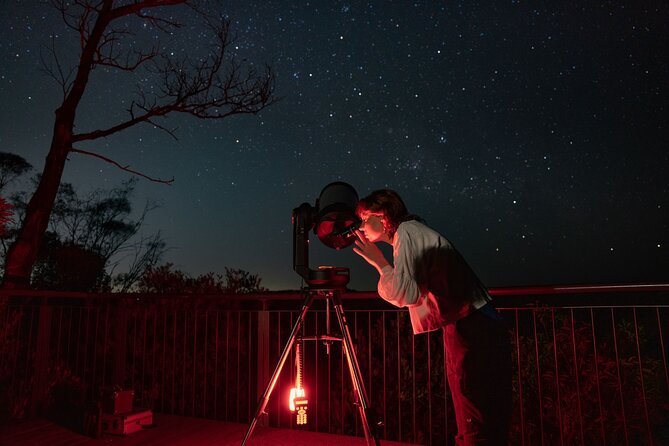
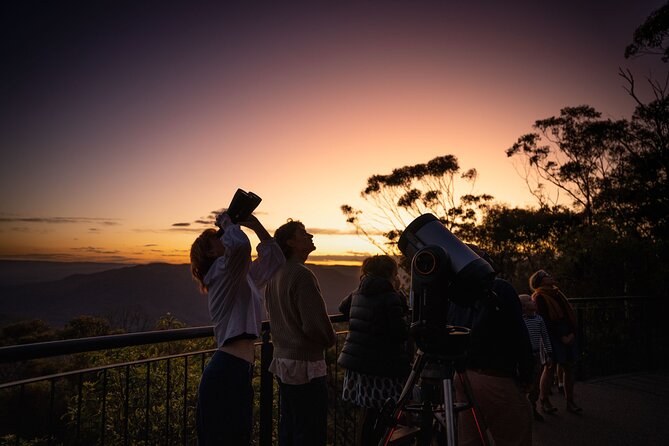
The most memorable part of this Blue Mountains evening is the shift from sunset to darkness. You begin with the last light over the Wentworth Falls area, then watch the Southern Cross and other constellations appear. A professional telescope brings planets, lunar craters, star clusters, and distant galaxies within reach, depending on the date and sky.
I like the way the astronomer explains the sky before asking you to peer through the equipment. I also like the small comforts: hot chocolate, warm blankets on some nights, and a limited group of up to 20 people. Wind and cloud can change the setting, though, and poor weather may mean an indoor planetarium session or a rescheduled date rather than the outdoor viewing you planned.
Key points at a glance
- The Southern Cross is a star of the show: You can learn to find Crux with your own eyes as twilight fades.
- A real telescope adds depth: Depending on the season, you may see lunar craters, planets, the Orion Nebula, star clusters, or galaxies.
- The session lasts about 90 minutes: It combines storytelling, constellation finding, telescope viewing, binoculars, and questions.
- The group is capped at 20 people: That is small enough for an interactive astronomy talk without making this a private tour.
- Weather can change the plan: You receive a decision by 1 pm on the day, with a credit, another date, or a possible indoor planetarium option.
- The setting is practical for many visitors: The meeting point is at Wentworth Falls Lookout Track, and the activity is listed as wheelchair and stroller accessible.
Why this is a fine way to meet the Southern Hemisphere sky
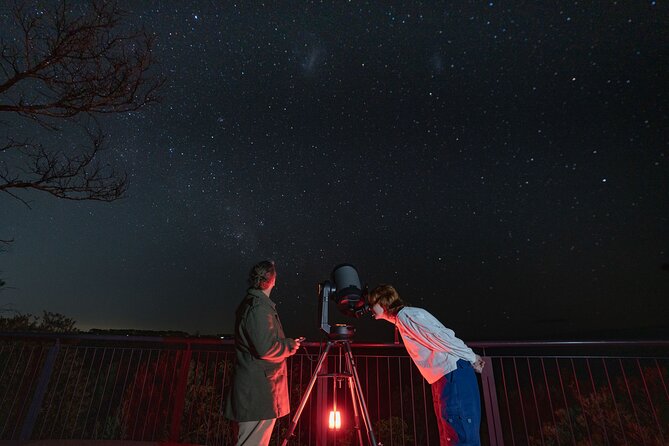
If you have never stood under a Southern Hemisphere sky, this tour gives you a useful introduction rather than simply pointing a telescope upward. The guide teaches you how to identify constellations without equipment, then shows you how binoculars and a telescope reveal another layer of the night.
That order matters. You first gain a sense of direction, then learn what the bright points mean. Visitors from Colorado found the appearance of the Southern Cross especially powerful, as Crux emerged from sunset glow into a clear night sky. You might already know many northern constellations, but the southern sky changes the cast of characters.
The astronomer is the heart of the session. Your guide is an astrophysicist with more than ten years of experience, and the evening includes plenty of time for questions. Nathan has led sessions praised for clear, engaging explanations, while Tom and Alka have also hosted evenings with a friendly, highly interactive approach. The exact guide may vary, but the format is built around conversation rather than a lecture you simply sit through.
This is a good choice if astronomy interests you but you do not want to study a star chart before your holiday. It also works for families, couples, and adults who think they are only coming for the hot chocolate. One visitor arrived mainly interested in the drink and still found the astronomy easy to follow. That says something useful about the tone: you do not need a science background.
More Blue Mountains days out:
- All Inclusive Blue Mountain,Scenic World,Lunch,Koalas,ferry
★ 5.0 · 7,832 reviews - From Sydney: Blue Mountains Full-Day Trip
★ 4.5 · 4,471 reviews - Blue Mountains Small-Group Tour from Sydney with Scenic World,Sydney Zoo & Ferry
★ 5.0 · 3,709 reviews
From sunset at Wentworth Falls to the first stars
The meeting point is the Wentworth Falls Lookout Track in New South Wales. The activity finishes back at the same meeting point, which keeps the evening straightforward. It is near public transportation, though the supplied details do not promise a specific bus connection or explain the best way to reach the lookout, so check your route before booking.
The 90-minute session begins as a sky-watching event, not just a telescope queue. As daylight fades, the guide talks you through the change from sunset to twilight. This is one of the best parts because the sky does not switch on all at once. The first visible stars appear while the brighter evening glow remains, then more constellations become clear.
The exact objects depend on the month, time of night, and conditions. You might see the Moon, Mars, Venus, Saturn and its rings, Jupiter and its moons, or the Orion Nebula. At other times, the focus may turn to star clusters, double and triple stars, galaxies, and the Milky Way.
That seasonal uncertainty is worth understanding. A telescope cannot show every famous object on every visit. The Orion Nebula, for example, is not equally well placed all year, and planets may not be visible at a convenient hour. The tour promises a changing menu of targets rather than a fixed checklist.
Learning constellations without getting lost
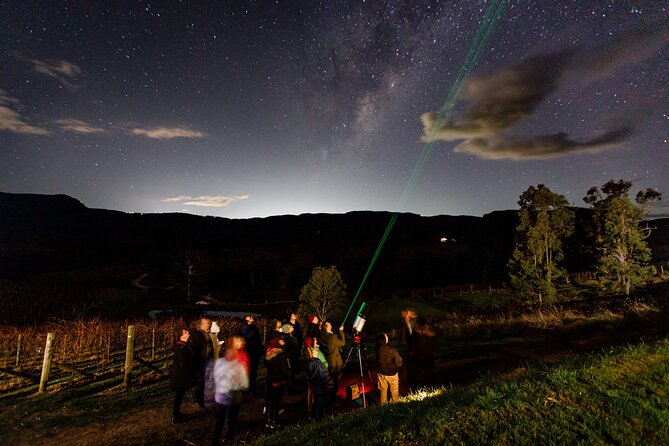
The naked-eye portion gives the session its sense of place. The guide uses a laser to point out constellations and tell their stories, helping you connect individual stars into a pattern. This is far more useful than seeing a star name flash past on a phone app, because you begin to understand how to find it again.
The Southern Cross is a natural highlight. Crux is compact and distinctive, and learning to spot it gives you a quick connection to the southern sky. You may also identify other constellations as the sky grows darker, though the exact selection depends on the night.
The storytelling keeps the astronomy approachable. You are not expected to remember technical terms or calculate distances. Instead, the guide explains what you are seeing, answers questions, and gives you time to look. The maximum group size of 20 helps here. This is not an intimate private observatory visit, but it should feel more personal than a large coach outing.
The guide’s enthusiasm matters. An evening outdoors can become flat if the presenter reads facts without responding to the group. The strongest sessions appear to combine solid astronomy with easy conversation. That balance suits beginners particularly well, while experienced sky watchers can use the question period to ask about objects beyond the main presentation.
What the telescope and binoculars add
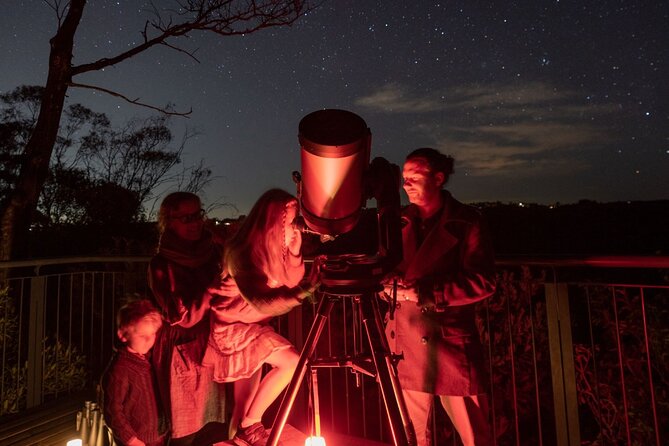
The professional-grade telescope is the main reason to pay for this rather than simply finding a dark park and looking up. With the right conditions, the Moon becomes a detailed object, with craters visible across its surface. A planet can shift from a bright point to a recognizable world. Saturn’s rings and Jupiter’s moons are especially rewarding targets when they are in view.
Astronomy binoculars offer a useful middle step. They cover more sky than the telescope and can make star clusters and the Milky Way easier to appreciate. You may also spot satellites moving across the sky, as one session did. These quick sightings are a reminder that the evening is not limited to a prepared list of objects.
Deep-space targets are less predictable. The Orion Nebula, galaxies, and star clusters depend on visibility, season, and the darkness available on the night. If clouds roll in or wind shakes the equipment, the viewing may be limited. The guide can explain the sky, but no telescope can overcome bad conditions.
That is why I would treat the equipment as a strong opportunity rather than a guarantee. You are paying for access to good gear and an experienced explanation, not a promise that every planet will appear.
Somewhere else entirely, still an easy day from Blue Mountains:
- Blue Mountain: Small-Group Tour with Lunch & Scenic World
★ 4.8 · 3,009 reviews - Blue Mountains Day Trip from Sydney Including Scenic World
★ 4.5 · 2,420 reviews - From Sydney: Blue Mountains Tour with Waterfall Walk & Lunch
★ 4.8 · 2,400 reviews - Blue Mountains Adventure: Scenic World, Zoo & Koala Photo
★ 4.7 · 2,062 reviews
Hot chocolate, blankets, and the practical side of night air
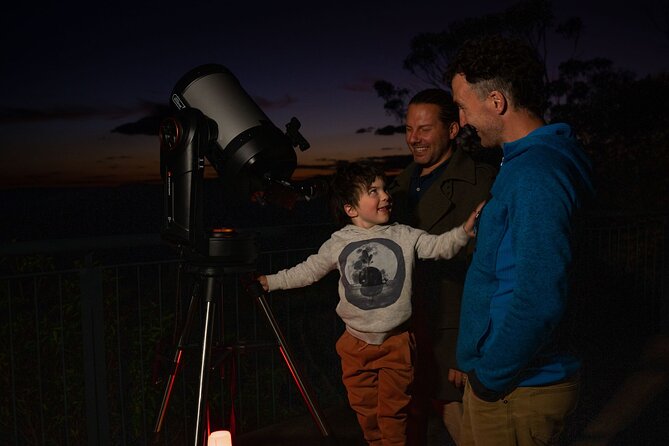
The supplied details promise complimentary hot chocolates, with warm or cold drinks listed as weather dependent. Warm blankets have also been used on some evenings. These details are not decoration. The Blue Mountains can feel cool after sunset, and comfort affects how long you can pay attention to the sky.
Still, bring clothing suited to an outdoor night. The information does not specify a full cold-weather kit, so do not assume the provided drink or blanket replaces a jacket. Wind can also affect the experience. One evening had to move from the lookout to a park because conditions were too windy, even though the astronomy talk continued.
The tour is listed as wheelchair and stroller accessible, and service animals are allowed. Most people can take part. Since outdoor access can depend on the precise surface and weather, you should confirm any personal mobility needs before arrival, especially if the lookout route matters to you.
English and French are available. That is helpful for mixed-language groups, though the details do not specify whether every session is bilingual or whether you must request a language in advance. Check at booking if language support is important.
Is $60.97 a fair price?
At $60.97 per person, this sits in the reasonable middle ground between a free night-sky walk and a private astronomy lesson. The price covers about 90 minutes with an astrophysicist, a professional telescope, astronomy binoculars, guided constellation stories, questions, and a hot chocolate when conditions allow.
I think the value is good if you are already visiting the Blue Mountains and want a structured evening activity. You would need to buy or borrow suitable equipment to match the telescope, then teach yourself what to look for. Here, the guide does the planning and translates what you see into something memorable.
The value is less certain if your main goal is a specific planet or nebula. The Moon, planets, Orion Nebula, and galaxies are all conditional targets. A cloudy or windy night can reduce the telescope time, even though the guide may still provide a useful astronomy session.
The group limit also helps the price. With no more than 20 people, the telescope should not feel like a huge public queue, though you will still share viewing time. For a private session, expect to pay more elsewhere. For a first introduction to southern astronomy, this is a fair spend.
Bookings average about 24 days ahead, so I would not leave this until the last evening of a Blue Mountains stay. The mobile ticket is convenient, and confirmation is sent within 48 hours, subject to availability.
Weather planning and the important fine print
Weather is the main risk. If you have not received an email by 1 pm on the day, the operator says the outdoor stargazing tour is confirmed. That gives you a useful same-day signal before you arrange dinner or transport.
The bad-weather choices need careful attention. The main information says you may choose a transferable gift voucher or credit, valid for three years, or attend an alternative 90-minute indoor planetarium astronomy tour. The indoor option needs at least eight participants. It uses a dome, a powerful projector, and a cinema-style presentation.
The same information also says no refund is offered in the event of bad weather. A separate cancellation statement says that if the operator cancels because of poor weather, you will be offered another date or a full refund. Since those terms do not match perfectly, I would confirm the current weather policy before paying, especially if your schedule is tight.
The general cancellation rule is strict: your booking is non-refundable and cannot be changed for personal reasons. If the minimum number of participants is not reached and the operator cancels, you are offered another date, another experience, or a full refund.
Who will enjoy this most?
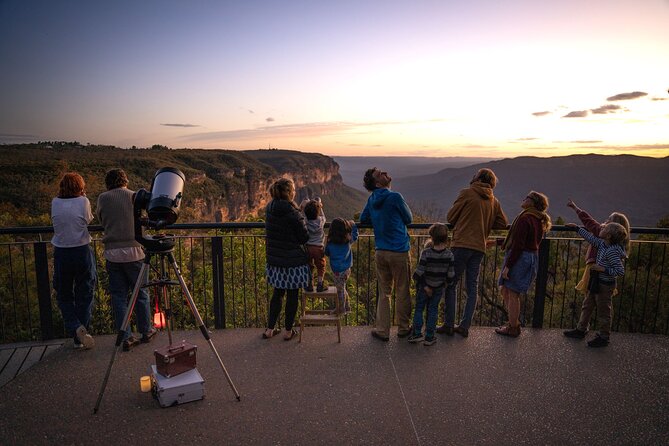
I would recommend this for first-time stargazers, families with older children, couples looking for a calm evening, and anyone curious about the Southern Hemisphere. It is also a smart choice for visitors who want an activity with a clear start and finish rather than wandering outside in the dark hoping to spot something.
It suits you if you enjoy learning as you look. The guide explains constellations, answers questions, and helps you use the telescope instead of leaving you to guess what is in view. The hot chocolate is a welcome bonus, especially on a cold night.
You may want a different plan if you need guaranteed outdoor viewing, dislike weather-dependent bookings, or already own strong astronomy equipment and know the sky well. The 90-minute format is an introduction, not a full-night observatory session.
Should you book Blue Mountains Stargazing?
Book it if you want a friendly, well-organized introduction to the southern sky and can accept that nature controls the final result. The strongest reasons are the astrophysicist guide, the professional telescope, the chance to learn the Southern Cross, and the easy mix of explanation and hands-on viewing.
Try to book ahead, check the 1 pm weather message, and bring warm clothing. If a planetarium alternative or credit would not work for your plans, read the weather terms carefully before committing.
For most people spending several days in the Blue Mountains, this is worth $60.97. You may arrive expecting only a pleasant night outside and leave with a new ability to find Crux, recognize a planet, and look at the sky with more purpose.
FAQ
Where does the stargazing tour meet?
The tour starts at Wentworth Falls Lookout Track in New South Wales and finishes back at the same meeting point.
How long does the experience last?
The stargazing session lasts approximately 90 minutes.
What might I see through the telescope?
Depending on the season and conditions, you might see the Moon, lunar craters, Mars, Venus, Saturn and its rings, Jupiter and its moons, the Orion Nebula, star clusters, double or triple stars, galaxies, and the Milky Way.
Is the tour suitable for wheelchair and stroller users?
The activity is listed as wheelchair and stroller accessible. Service animals are also allowed, and most people can participate.
What happens if the weather is poor?
You may be offered a transferable gift voucher or credit valid for three years, or an alternative 90-minute indoor planetarium astronomy tour. The indoor option requires at least eight participants. The supplied cancellation terms also say that a weather cancellation may lead to another date or a full refund, so confirm the applicable option before booking.
What languages are available?
English and French are available for the experience.
Newest Blue Mountains write-ups
- Ultimate All Inclusive Blue Mountains with Scenic World Tour★ 5.0 · 23 reviews
- Ultimate Blue Mountains Private Tour with Scenic World and Wildlife Park★ 5.0 · 10 reviews
- 3 Day Scenic Tour of Blue Mountains from Sydney★ 5.0 · 3 reviews
- 3 Day Private Tour in Blue Mountains and Kiama in Sydney City★ 5.0 · 6 reviews
- Private All Blue Mountains Day Tour★ 4.5 · 7 reviews
- Blue Mountains Small Group Tour with Lunch, Zoo and Scenic World★ 5.0 · 25 reviews
- Private Tour: Jenolan Caves & Blue Mountains in a day★ 5.0 · 4 reviews
- Private Luxury Blue Mountain Tour with Wildlife and River Cruise★ 4.5 · 37 reviews
Blue Mountains Tours, compared.
All Inclusive Blue Mountain,Scenic World,Lunch,Koalas,ferry
Read our review →
Blue Mountains Small-Group Tour from Sydney with Scenic World,Sydney Zoo & Ferry
Read our review →
Blue Mountains Day Trip from Sydney Including Scenic World
Read our review →
Blue Mountains Tour with Waterfall Walk & Lunch
Read our review →
Blue Mountains Adventure: Scenic World, Zoo & Koala Photo
Read our review →
Blue Mountains Day Tour Including Parramatta River Cruise
Read our review →Browse the lists this tour appears in