
Reviewed · SYDNEY WALKING TOURS
Historic Walking Tour of Glebe
Glebe tells Sydney’s story in a single morning: grand houses built for wealthy families sit beside reminders of industry, religion, and social change. This one-hour walking tour links six important buildings, including Gothic churches, sandstone architecture, and former mansions with surprising later lives.
I like the compact route and the way it focuses on buildings you could easily pass without understanding. I also like that guide Ned brings the social side of Glebe into the walk, not just dates and architectural labels. The main consideration is the short running time, since six stops leave only about ten minutes at each one.
- Six stops in one hour: A brisk route through Glebe’s churches, mansions, and civic past.
- Guide Ned: Expect local stories that connect architecture with the people who shaped the suburb.
- Three notable churches: St Johns, Glebe Presbyterian Church, and St James’ Catholic Church each offer a different style and story.
- Two grand residences: Bidura House and Hartford House show Glebe’s wealthy Victorian side.
- Toxteth Park House finale: The tour ends at the former mansion now associated with St Scholastica’s College.
- Saturday morning timing: Start at 10:00 am, with the route ending on Avenue Road.
Glebe in six buildings and sixty minutes
Glebe is a good place for a walking tour because its past is visible from the pavement. Edwardian townhouses, Victorian mansions, sandstone churches, and institutional buildings sit within a relatively small area. You do not need a long bus ride between attractions, and the one-hour format makes this an easy addition to a Sydney morning.
The tour begins at 140 Glebe Point Road at 10:00 am on Saturday. From there, the route works through six stops, each planned for roughly ten minutes. That pace is useful if you want a clear introduction to the suburb, though it is not designed for long interior visits or extended photography at every address.
I would think of this as a guided orientation rather than a full architectural study. You get the broad story, the key names, and the reasons these buildings matter. If you enjoy asking many questions or lingering over details, the schedule may feel tight.
St Johns Anglican Church opens the story
The first stop is St Johns Anglican Church at 138A Glebe Point Road. Its Gothic Revival design and tall spire make it one of the easiest buildings to spot in the area. The church dominates the streetscape, so it gives the tour an immediate sense of scale.
The grounds and the building’s history are the focus here. The stop is free, and the ten-minute time slot should give you enough time to take in the exterior and hear the main story without turning the first part of the walk into a long lecture.
I like starting with St Johns because it sets up an important theme: Glebe was not simply a residential suburb. Religious buildings helped shape its identity, while the surrounding houses reveal the social groups who lived nearby. The church also gives you a strong visual reference point as you begin walking.
More guided walks in Sydney:
- Sydney Opera House Official Guided Walking Tour
★ 4.5 · 3,770 reviews - Sydney The Rocks Guided Walking Tour
★ 5.0 · 1,546 reviews - Sydney: The Rocks 90-Minute History Walking Tour
★ 4.7 · 1,092 reviews
Glebe Presbyterian Church and a building that moved
At 158 Bridge Road, Glebe Presbyterian Church offers a different architectural mood. It is a prominent sandstone building, and its unusual story includes a nomadic past. That detail gives the walk a practical lesson in how Sydney’s old buildings can change location, use, and meaning over time.
This is not just another stop for photographing stone walls. The building’s movement makes it a useful example of the forces that shaped Glebe. Churches were important community spaces, but they were also affected by development, changing populations, and shifting needs.
You have about ten minutes here. I would listen closely for the explanation of the church’s former life, since the story is likely more memorable than a list of construction dates. The stop also breaks up the Gothic style of St Johns with a heavier sandstone presence.
St James’ Catholic Church and the surrounding complex
The third stop is St James’ Catholic Church at 2 Woolley Street. It sits within a larger heritage complex that brings together several architectural styles. That mixture makes the site more interesting than a single isolated church.
Detailed stained-glass windows are part of the appeal, along with the church’s unusual back story. If you enjoy buildings where small details reward a closer look, this should be one of the better stops on the route. The ten-minute visit is short, so you will want to keep your attention on the features the guide points out.
The church also adds a different religious and social thread to the tour. After St Johns Anglican Church and Glebe Presbyterian Church, St James’ helps you compare how different traditions expressed themselves through architecture and community buildings.
The practical point is simple: you should not expect a long church visit. Admission is listed as free, but the tour information does not promise extended interior access at each stop. Treat the stop as a guided look at the site and its story.
Bidura House reveals Glebe’s sharper contrasts

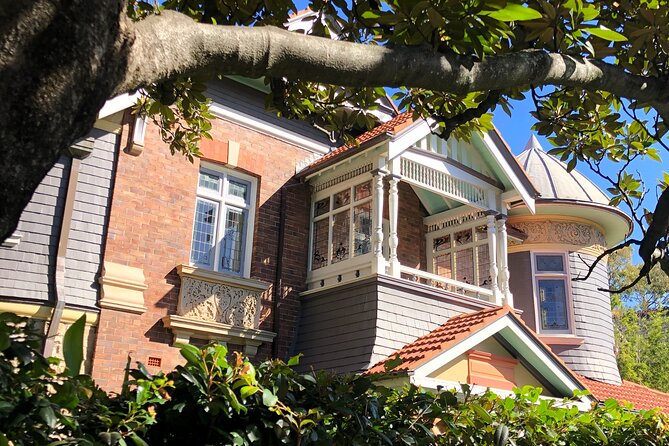
At 357 Glebe Point Road, Bidura House brings the tour into the world of private wealth. The building began as an 1860s gentleman’s residence, a large home tied to Glebe’s more prosperous residents.
Its later use makes it especially compelling. Bidura changed from a prominent mansion into a large children’s detention centre. That shift gives the building a difficult and important social history. The same rooms and grounds that once represented privilege later became linked with institutional care and confinement.
I find this kind of contrast more revealing than a simple parade of beautiful houses. It shows that buildings do not keep one meaning forever. Their uses change as a suburb changes, and Bidura is one of the clearest examples on this route.
The stop is again planned for around ten minutes. You will hear the outline of the house’s changing role, but you should not expect a full tour of the property. The value is in understanding what happened there and how that story fits Glebe’s wider development.
More history and heritage trips in Sydney:
- Sydney The Rocks Historical Pub Tour
★ 5.0 · 251 reviews - Sydney Convicts, History & The Rocks 2.5-Hour Walking Tour
★ 4.9 · 181 reviews - Historical True Crime Walking Tour of East Sydney
★ 5.0 · 53 reviews - Private Tour in Sydney to Bondi and Historical Site
★ 5.0 · 50 reviews
Hartford House and the suburb’s grandest private homes
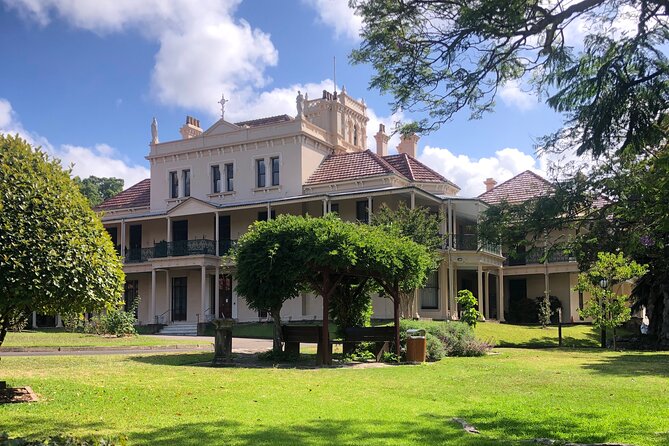
Hartford House, at 244 Glebe Point Road, is an elaborate mansion and one of the area’s more prestigious residences. It represents the part of Glebe shaped by wealthy families who could afford substantial homes close to the city.
This is where the walking tour’s architectural theme becomes clear. Glebe is not just a collection of modest terrace houses. Its streets also contain large residences designed to display status, space, and money. Hartford House helps you read those clues in the building itself.
A guide adds value here because the outside appearance alone cannot explain who commissioned the house, how it fitted into the suburb, or why its presence matters. Ned’s role is especially useful on stops like this, where the social story turns an impressive facade into something more meaningful.
The ten-minute format keeps the stop moving. I would take a few photographs, note the architectural details, and focus on the explanation rather than trying to record every feature.
Toxteth Park House ends the walk on a high note
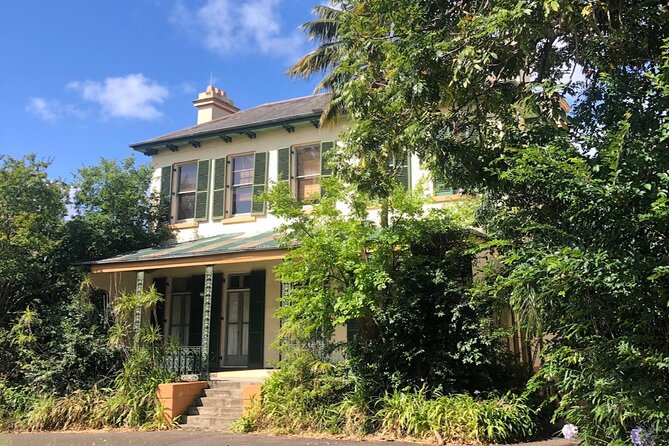
The final stop is the former Toxteth Park House at St Scholastica’s College. It is described as the most impressive house in Glebe and was once the mansion of one of Sydney’s richest families.
That makes it a fitting ending. After seeing churches, a former detention centre, and other elite residences, you reach the grandest expression of private wealth on the route. The building also helps explain why Glebe developed with such a striking mix of ordinary urban life and imposing homes.
The tour finishes outside St Scholastica’s College on Avenue Road. This is useful to know before booking, since the endpoint is different from the starting point on Glebe Point Road. You will need to plan your next move from there rather than assuming you will return to the start.
The final stop may also be the most satisfying for architecture fans. Still, the tour’s appeal is not only visual. Toxteth Park House completes the story of the families, institutions, and changing uses that shaped Glebe.
What the one-hour format means for you
At around $28.69 per person, the tour is priced as a short guided experience rather than a full half-day outing. I think the value depends on how much context you want. You can walk past these buildings for free, but you will not automatically know why they matter, how their uses changed, or how they fit into Glebe’s social story.
Six stops in sixty minutes means the walk is efficient. It is a good choice if you want a focused introduction before exploring Glebe on your own. It is also easy to combine with other Sydney plans because it runs on Saturday mornings and begins at 10:00 am.
The trade-off is depth. You will spend roughly ten minutes at each location, so this is not the right pick if you want long interior visits, extended photography, or a slow architectural inspection. The tour’s strength is the guide’s ability to connect many places in a short time.
The experience is limited to a maximum of 30 people. That is large enough for a social group but still more contained than a major city sightseeing tour. Group size can affect how easily you hear the guide, so arriving at the meeting point a little early is sensible, even though the official start time is 10:00 am.
Saturday morning planning and practical details
The meeting point is 140 Glebe Point Road, Glebe NSW 2037. The finish is outside St Scholastica’s College at 15 Avenue Road, Glebe, so plan for a one-way walk rather than a return loop.
The tour operates every weekend on Saturday mornings. It is near public transportation, which makes the central meeting point practical for a Sydney itinerary. A mobile ticket is provided, and booking confirmation arrives at the time of booking.
Most people can participate, and service animals are allowed. Pets are welcome as well, which is a useful detail if you are planning a day out with a dog. The tour requires good weather, so poor conditions may lead to a different date or a full refund.
Free cancellation is available up to 24 hours before the start time. Cancellations or changes made less than 24 hours before the tour are not refunded or accepted. The experience also requires a minimum number of participants, so a cancellation for that reason may result in another date, another experience, or a full refund.
Coffee and tea are not included. Since the walk starts in the morning, I would arrange your drink before or after the tour rather than expecting a refreshment stop to be part of the experience.
Who will get the most from this Glebe walk
I would recommend this tour to you if you like urban history, architecture, and social stories but do not want to spend half a day in a museum. The route gives you a useful framework for understanding one of Sydney’s older inner suburbs.
It should also suit first-time visitors who want something beyond the Harbour Bridge and Opera House. Glebe offers a closer look at how city neighborhoods develop, especially when wealthy residences, churches, industry, and institutions share the same streets.
Local residents may find value here too. One strong review praised Ned for explaining more about Glebe in a few hours than the writer had learned during 15 years living there. That is a striking endorsement of the guide’s storytelling, and it suggests the tour can reveal overlooked details even if you already know the suburb.
I would be more cautious if you have limited mobility or dislike brisk walks, since the tour moves between six locations in one hour and the supplied details do not specify the walking distance or terrain. The route is designed for most participants, but you may want to ask the provider for more information before booking if that matters to you.
Should you book the Historic Walking Tour of Glebe?
Book it if you want a short, story-led introduction to Glebe and you value a guide who can connect grand houses with the people and institutions behind them. The strongest feature is the mix of subjects: three churches, two imposing residences, Bidura House, and the former Toxteth Park mansion.
The price is reasonable for a guided hour, especially if you would otherwise walk through Glebe without understanding what you are seeing. Just keep your expectations realistic. This is a brisk overview, not a detailed house tour or a full morning of interior access.
For architecture fans, Sydney repeat visitors, and anyone curious about how wealth and social change shaped an inner-city suburb, I would book it. If you want refreshments, a relaxed pace, or long stops inside each building, choose a longer experience instead.
FAQ
Where does the Historic Walking Tour of Glebe start?
The tour starts at 140 Glebe Point Road, Glebe NSW 2037, Australia.
Where does the tour finish?
The tour finishes outside St Scholastica’s College at 15 Avenue Road, Glebe NSW 2037.
What time does the tour begin?
The tour starts at 10:00 am.
How long does the tour last?
The tour lasts approximately one hour.
When does the tour operate?
It operates every weekend on Saturday mornings.
How much does the tour cost?
The listed price is $28.69 per person.
Is the tour ticket mobile?
Yes. The experience provides a mobile ticket.
How many people can join the tour?
The maximum group size is 30 participants.
Are pets and service animals allowed?
Yes. Pets are welcome, and service animals are allowed.
What happens if the weather is poor?
The experience requires good weather. If poor weather causes a cancellation, you will be offered a different date or a full refund.
Newest Sydney write-ups
- Sydney: “Vivid Sydney” Festival of Light Sightseeing Cruise★ 4.3 · 24 reviews
- Private Transfer from Sydney Airport to Sydney (CBD)Hotel or Port★ 4.5 · 24 reviews
- Sunset Harbour Bridge Kayak Escape★ 5.0 · 8 reviews
- Whale Watching Sailing Experience in Sydney★ 5.0 · 28 reviews
- Wine Tours Sydney – Southern Highlands Day Escape, Full Day Wine Tasting Tour★ 5.0 · 9 reviews
- Private Wildlife Waterfalls and Wine Day Tour from Sydney★ 5.0 · 6 reviews
- Whale Watching Sydney★ 3.5 · 17 reviews
- Sydney Harbour Tall Ship Whale & Sail – Whale Watching Cruise★ 5.0 · 5 reviews
Sydney Walking Tours, compared.
Sydney Opera House Official Guided Walking Tour
Read our review →
Sydney Cricket Ground (SCG) and Museum Walking Tour
Read our review →
Behind The Scenes: Sydney Cricket Ground (SCG) Guided Walking Tour
Read our review →
Ultimate Sydney Walking Tour (Small-Group, Drink Included)
Read our review →
Convicts and The Rocks: Sydney’s Walking Tour Led by Historian
Read our review →Browse the lists this tour appears in