
Reviewed · SYDNEY OPERA HOUSE TOURS
Sydney Opera House Official Guided Walking Tour
The Sydney Opera House is far more interesting inside than its famous white sails suggest. In one focused hour, you walk through elegant foyers, enter performance spaces, study the unusual tiled shells, and hear how a bold Danish design became one of the world’s best-known buildings.
I like the way the guide connects architecture with practical problems, especially the long construction and acoustic challenges. I also like the chance to sit in a custom white birch chair and see parts of the building normally reserved for ticket holders. The main drawback is that one hour covers only part of the complex, usually two venues, and the standard route includes about 300 stairs.
Key points at a glance
- See inside two performance spaces: The route commonly includes the main Concert Hall and one smaller venue, such as The Studio, though access can change.
- Learn why the roof looks the way it does: Your guide explains the shell design, the Danish architect, and the building problems behind the famous form.
- Expect about 300 stairs: They come in smaller sections, but comfortable shoes and a reasonable level of mobility help.
- Use the headsets: Individual audio equipment makes it easier to hear guides such as Sheila, Laura, Michael, or Emmi in busy indoor spaces.
- Allow extra time for check-in: Arrive at the Welcome Centre 15 minutes early, since late arrivals cannot join the tour.
- Consider the meal add-on: Tour and Dine can be redeemed at House Canteen, Opera Bar, or Midden by Mark Olive, within stated time windows.
Why the Opera House makes a better inside visit
From the outside, the Sydney Opera House can seem almost too familiar. You photograph the sails from the harbor, admire the white shells, and move on. Inside, the building becomes a much more complicated story.
The guided walk explains how the architect’s vision had to be turned into a working performance center. You hear about the Danish architect, the inspiration behind the design, the unusual exterior tiles, and the engineering problems that shaped the finished building.
That context matters. Without it, the Opera House is simply a striking object. With it, you begin to notice why the shell roofs are arranged as they are, why the interiors feel different from room to room, and why construction took so much time and effort.
The building opened in 1973 and now hosts more than 1,500 performances each year, with some descriptions putting the number above 1,800 concerts, plays, musicals, and ballets. The exact annual figure can vary, but the point is clear: this is a working performance center, not just a monument.
More ways inside the Opera House:
- Sydney: Opera House Guided Tour with Entrance Ticket
★ 4.8 · 8,312 reviews - Sydney: Sunrise Kayak, Opera House & Under Harbour Bridge
★ 5.0 · 869 reviews - Sydney: 1-Hour Opera House Tour with Meal and Drink
★ 4.7 · 546 reviews
Starting at the Welcome Centre
You check in at the Welcome Centre on the lower concourse level. This is the part of the visit that needs the most practical planning, since signage for tours can be easy to miss. Allow time to find the lower level, collect your tour arrangements, and complete the required cloaking procedure.
Arrive 15 minutes before departure. If you are more than five minutes late after the tour begins, you lose the booking and cannot join the group. That strict rule makes sense inside an operating theater complex, but it leaves no room for a relaxed arrival.
Large backpacks and bags must be checked. Keep your essentials small and easy to manage. The tour group can include up to 35 people, so the guide may need to keep everyone moving through narrow corridors and shared public areas.
Individual headsets are used on the tour. I consider this a real plus. You can hear the guide while walking, even when the group spreads out or other people are nearby.
The shell tiles and the Danish design
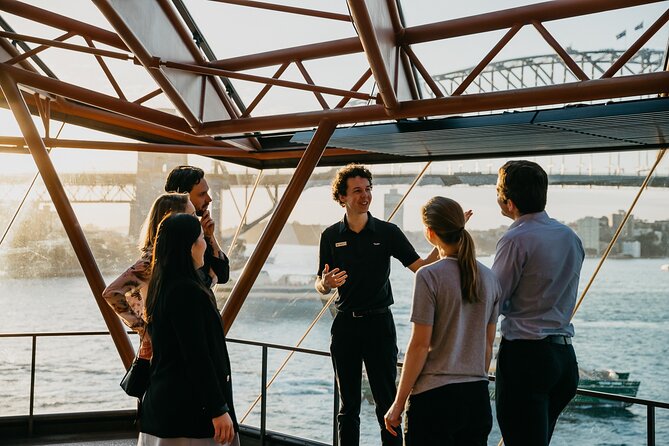
The first major payoff is the explanation of the exterior. The Opera House roof is made from distinctive shell-like sections covered in tiles. From a distance, the surface looks smooth and bright. Up close, the tile pattern and structure become part of the building’s story.
Your guide explains the inspiration behind the design and the problems involved in making the original vision work. You learn about the Danish architect and the building challenges that affected the project. The tour does not treat the architecture as a collection of dates. It shows how design, engineering, and performance needs had to meet in the same building.
This is where guides make a real difference. Peter, described in tour feedback as a retired architect who worked on some Opera House projects, has been especially praised for his technical insight. Other guides named by visitors include Sheila, Michael, Katharina, Laura, and Emmi. Guide assignments vary, so you should not book expecting a specific person, but the best guides add humor and clear explanations to the facts.
You may also see a film about the design and construction. It helps make the scale of the project easier to understand before you continue into the performance areas.
Inside the foyers and performance spaces
The route leads through the Opera House foyers, where the building’s clean lines and open spaces are easier to appreciate than from the outside. The foyers connect the public parts of the complex with the theaters, so you get a sense of how the building works on a performance night.
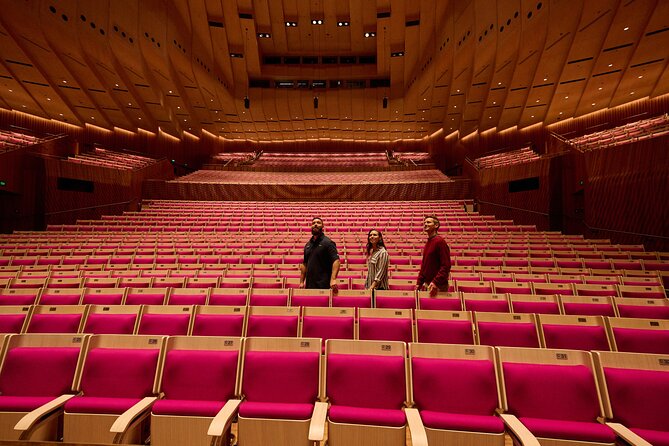
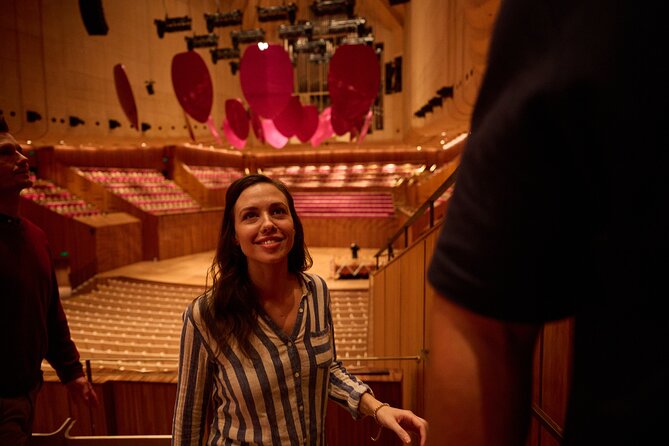
The tour commonly enters the main Concert Hall and one of the smaller venues. The Studio is one example of a smaller space included on some routes. You may sit in a custom-made white birch chair, look toward the vaulted ceiling, and see the room without a full audience in place.
That empty-room view is useful. It lets you study the shape, seating, ceiling, and stage area without the distraction of a performance. You may also hear how the acoustic profile of the Concert Hall can be adjusted for different types of events.
The smaller venue gives you a different perspective. Instead of one huge ceremonial room, you see how the Opera House supports several forms of performance. The complex has five smaller venues in addition to the main spaces, but the standard one-hour walk does not cover all of them.
That limitation is important. If you expect a full inspection of every theater, you will be disappointed. The tour is an introduction to the building, not a complete backstage clearance.
More guided walks in Sydney:
- Sydney The Rocks Guided Walking Tour
★ 5.0 · 1,546 reviews - Sydney: The Rocks 90-Minute History Walking Tour
★ 4.7 · 1,092 reviews - Sydney Cricket Ground (SCG) and Museum Walking Tour
★ 4.9 · 616 reviews - Behind The Scenes: Sydney Cricket Ground (SCG) Guided Walking Tour
★ 5.0 · 581 reviews
The behind-the-scenes element
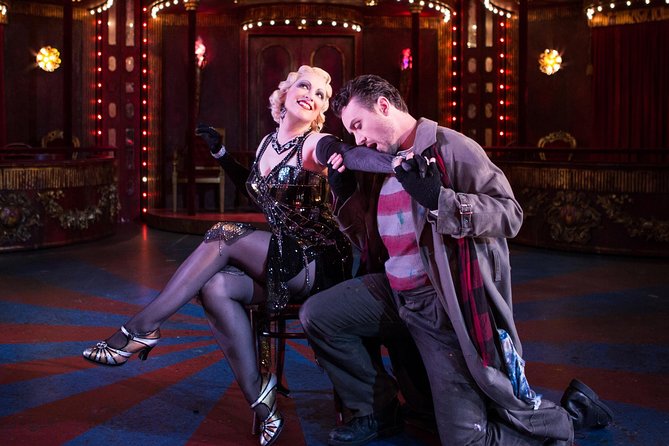
The phrase behind the scenes should be taken in a modest but useful sense. You see areas that are not normally open to the general public, including sections reserved for ticket holders and people attending performances. You may catch a glimpse of working areas or a rehearsal, depending on what is happening at the time.
Access is not fixed. A theater may be in use, preparing for a show, or closed for operational reasons. Venue access can change right up to departure, so do not treat a particular room as guaranteed.
That uncertainty is part of visiting a working venue. The Opera House is not a museum arranged for visitors alone. Rehearsals, performances, staff activity, and technical work continue around the tour schedule.
If a rehearsal is visible during your visit, it can be a memorable extra. But the core value remains the architecture, the interior spaces, and the explanation of how the building functions.
The 300 stairs and physical effort
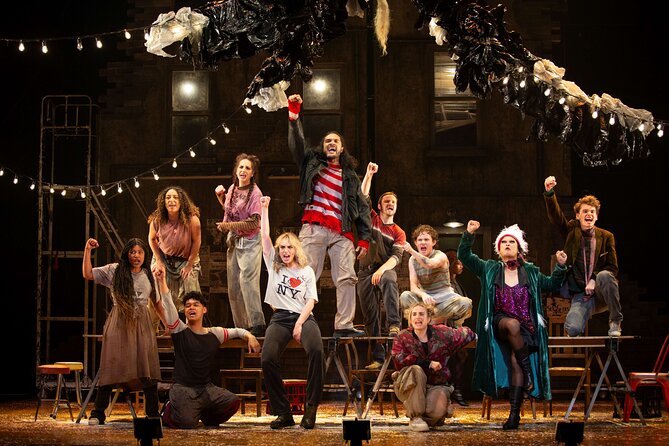
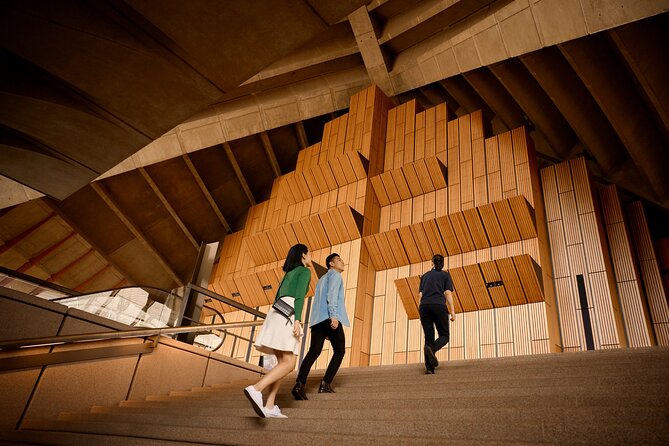
The standard guided route includes about 300 stairs. They are not usually taken in one long climb, and several people describe the sections as manageable. Still, you move up and down throughout the hour, so this is not a flat indoor walk.
Wear comfortable shoes. If stairs are difficult for you, contact the Opera House before booking and request a mobility access tour. These tours are available daily on request, but pre-booking is required.
Most people can take part in the standard route, but the stair count should be part of your decision. The tour is low impact in the sense that it is a slow architectural walk, not a strenuous hike. Even so, limited mobility, joint problems, or fatigue can make the repeated steps a serious issue.
Is one hour long enough?
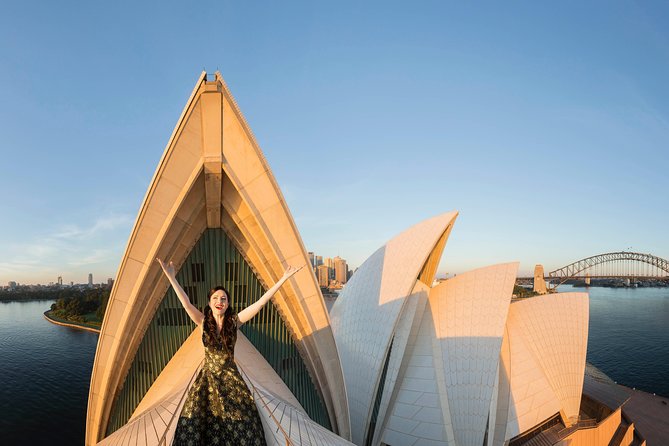
One hour is enough to understand the building and see selected interiors. It is also short enough to fit neatly into a day of sightseeing around Circular Quay.
The pace is fairly efficient. You stop for explanations, move through foyers, enter selected venues, and continue before the group lingers too long in any one place. Sixty minutes can pass quickly, particularly when the guide explains the architecture well.
Some people will wish the tour lasted longer. That is a fair criticism. There is much more to the Opera House than two halls and a few public corridors.
I see the short length as both a strength and a limit. It works well if you want a clear introduction before a concert, opera, or evening walk. It is less satisfying if you want detailed access to every theater or a long technical discussion.
The price and what you receive
At $34.43 per person, the tour sits at a reasonable price for a one-hour visit to one of Sydney’s major cultural sites. Admission to the Opera House and a local guide are included.
The value comes from access and interpretation. You could walk around the exterior for free, but you would miss the explanation of the shell tiles, the architect’s ideas, the construction challenges, and the interiors reserved for ticket holders. You would also have little chance of seeing the halls in a quiet, empty state.
The price is easier to justify if you care about architecture, design, music, or Sydney’s civic story. It is less compelling if your main goal is simply a photograph of the sails, since the outside can be enjoyed without a tour.
A Tour and Dine version may be available as an add-on. You can redeem it at House Canteen or Opera Bar between 11:30 a.m. and 6 p.m. on the tour day. At Midden by Mark Olive, the stated redemption windows are 11:30 a.m. to 2:30 p.m. or 5 p.m. to 6 p.m.
Check the meal conditions when booking. Food and drinks are not included in the standard tour unless that option is selected.
Who will enjoy this tour most?
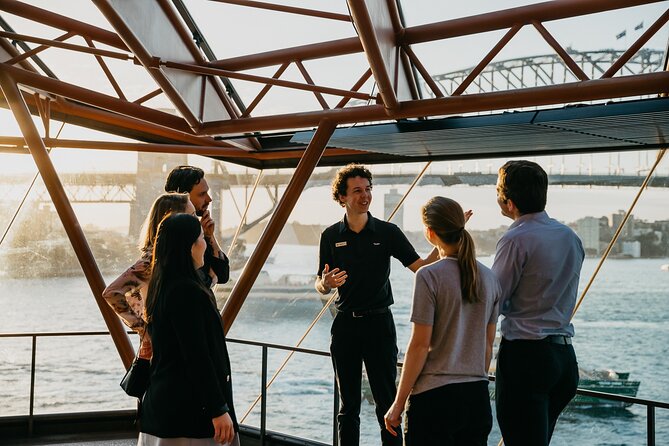
I would recommend it to first-time Sydney visitors who want more than the usual harbor photograph. It also suits anyone interested in modern architecture, performance venues, construction, or the practical workings of a major theater.
Families can take part if children are comfortable walking and handling the stairs. The one-hour format helps, although younger children may find the architectural explanation slow at times.
It is particularly useful before attending a performance. You will recognize the halls, foyers, chairs, and ceiling details later, and the building will feel less like a grand shell and more like a place designed for music and theater.
The tour also works well at the start of a Sydney stay. It gives you a clear sense of the Opera House and the surrounding harbor precinct, leaving the rest of the day open.
You may want to skip it if you have serious mobility limits and cannot arrange the access tour in advance, or if you already know the building well and want a full technical or backstage visit. The standard route is focused and selective.
Practical advice before you book
Select the correct language when reserving. Changing that detail at the last minute may not be possible.
Book ahead when your schedule is tight. Confirmation is sent within 48 hours, subject to availability, and popular departure times can fill. The tour has a maximum group size of 35, which is large enough to feel organized but small enough for the headset system to work well.
Do not plan to arrive just at departure time. Finding the Welcome Centre, checking in, and handling bags takes time. Arriving early also protects you from losing the entire booking because of a short delay.
Check the venue schedule if a particular hall matters to you, but understand that access can change even after booking. The Opera House remains an active working venue, and performances or rehearsals may close some rooms.
Free cancellation is available up to 24 hours before the start time. Cancellations or changes inside that window are not refunded or accepted.
Should you book the Sydney Opera House tour?
Yes, if you want to understand why the Opera House became such a famous building instead of merely seeing it from the outside. The guide-led explanation, selected theater access, shell-tile details, and empty performance spaces make the $34.43 fee fair.
Go in with the right expectations. You will not see every hall, the route includes about 300 stairs, and access can change. But for one hour, the tour gives you a useful look at the architecture and the working heart of Sydney’s best-known landmark.
FAQ
How long is the Sydney Opera House guided tour?
The standard guided walking tour lasts approximately one hour.
How much does the tour cost?
The listed price is $34.43 per person.
What is included in the tour?
Admission to the Sydney Opera House and a local guide are included.
How many stairs are on the standard route?
The standard tour includes approximately 300 stairs, taken in smaller sections throughout the visit.
Is the tour suitable for people with limited mobility?
Mobility access tours are available daily on request, but you must arrange one in advance with the supplier. The standard route includes many stairs.
How early should I arrive?
Arrive at the Welcome Centre 15 minutes before the scheduled tour time. Tour and Dine participants are asked to check in 10 minutes before departure.
Can I join if I arrive late?
No. If you are more than five minutes late after the tour begins, you cannot join and the booking is forfeited.
Does the tour visit every theater in the Opera House?
No. The standard tour visits selected spaces, commonly two venues. Access depends on availability and can change before departure.
Can I add a meal to the tour?
A Tour and Dine option may be available. It can be redeemed at House Canteen or Opera Bar from 11:30 a.m. to 6 p.m., or at Midden by Mark Olive from 11:30 a.m. to 2:30 p.m. or 5 p.m. to 6 p.m. on the tour day.
Newest Sydney write-ups
- Sydney: “Vivid Sydney” Festival of Light Sightseeing Cruise★ 4.3 · 24 reviews
- Private Transfer from Sydney Airport to Sydney (CBD)Hotel or Port★ 4.5 · 24 reviews
- Sunset Harbour Bridge Kayak Escape★ 5.0 · 8 reviews
- Whale Watching Sailing Experience in Sydney★ 5.0 · 28 reviews
- Wine Tours Sydney – Southern Highlands Day Escape, Full Day Wine Tasting Tour★ 5.0 · 9 reviews
- Private Wildlife Waterfalls and Wine Day Tour from Sydney★ 5.0 · 6 reviews
- Whale Watching Sydney★ 3.5 · 17 reviews
- Sydney Harbour Tall Ship Whale & Sail – Whale Watching Cruise★ 5.0 · 5 reviews
Sydney Opera House Tours, compared.
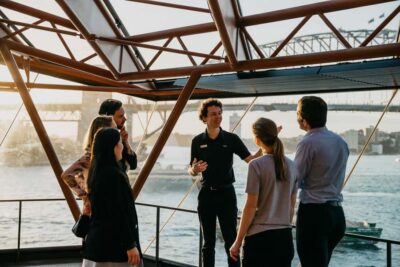

Sunrise Kayak, Opera House & Under Harbour Bridge
Read our review →
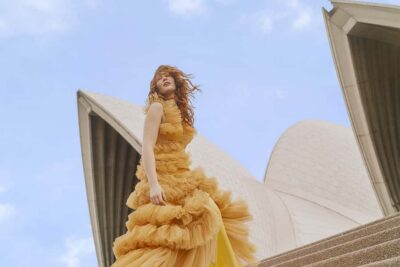
Great Opera Hits Ticket at the Sydney Opera House
Read our review →
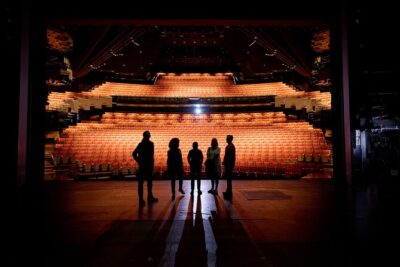
Sydney Opera House Backstage Guided Tour with Breakfast
Read our review →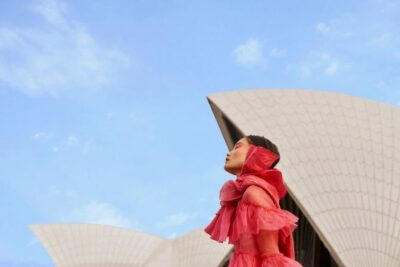
Opera Performance Tickets at the Sydney Opera House
Read our review →
Sydney Shore Excursion: Sydney Opera House Walking Tour
Read our review →Browse the lists this tour appears in