
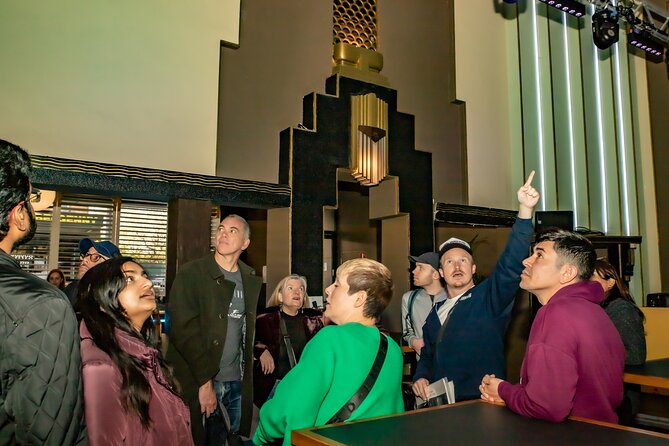
Reviewed · SYDNEY GHOST & TRUE CRIME TOURS
Historical True Crime Walking Tour of East Sydney
Sydney’s polished center gives way quickly to a darker past on this two-hour walk through Hyde Park and Darlinghurst. You’ll hear about a 1920s cold case, the Parkland Killer, the Mutilator Murders, old gang fights in Razorhurst, and the criminals, prostitutes, and drug dealers who once shaped East Sydney.
I like the way the tour pairs crime stories with social history, rather than treating murders as isolated shocks. I also like the modest $24 price and the manageable walking distance, which makes this an easy addition to a Sydney day. The main consideration is subject matter: the stories involve murder, violence, drugs, prostitution, and rough living conditions, so this is not a gentle sightseeing stroll.
The guide, Elliott, brings more than crime facts to the route. You’ll get context about convict-era Sydney, changing neighborhoods, the old prison system, and the social forces that made Darlinghurst one of Australia’s most dangerous suburbs from about 1890 to 1960.
Key points to know before you book
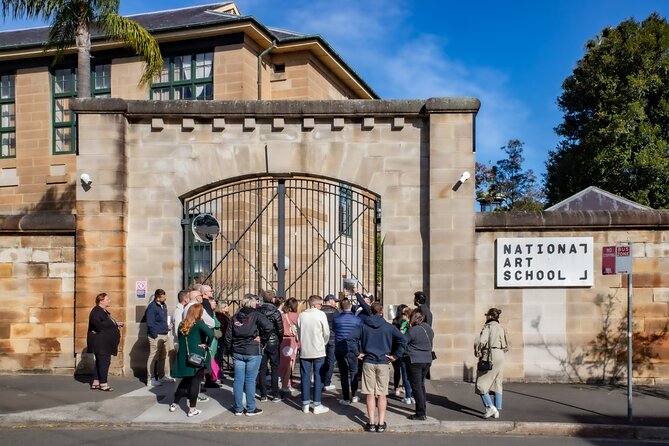
- Hyde Park begins the story: You’ll connect the park, the ANZAC Memorial, Aboriginal use of the area, early cricket, and a 1920s murder case.
- Darlinghurst is the main stage: About 90 minutes are spent among old streets, laneways, and crime scenes in East Sydney.
- Razorhurst gets its name from gang violence: The tour explains the street fights and criminal world behind this famous nickname.
- Convict-built prison history matters: The old Sydney Gaol, built in 1841 by convicts, adds a strong institutional side to the crime stories.
- The finish is at Taylor Square: Kinselas Hotel, a former 1930s funeral parlor, gives the walk an unusual final stop beside the Sydney Mardi Gras setting.
- The group is capped at 25: That keeps the tour social without making it feel like a huge city crowd.
Starting at Hyde Park with Sydney’s older stories
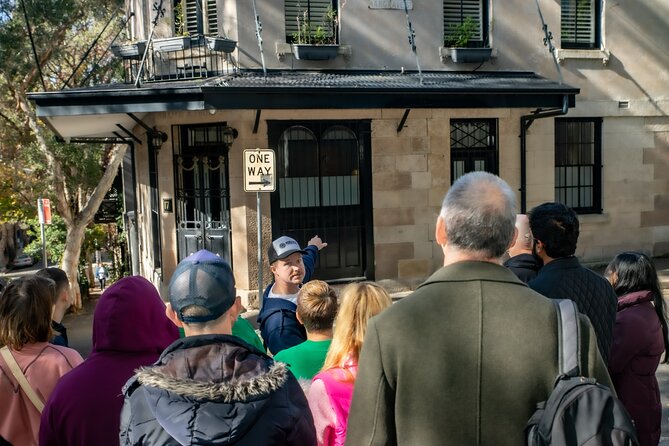
The tour starts at 11:00 am near the Museum in central Sydney, with the meeting point listed at Museum, Sydney NSW 2000. This is a useful location for a walking tour because it is easy to identify and puts you close to Hyde Park and the older streets of East Sydney.
The first half hour takes place in Hyde Park. At first glance, this may seem like a calm place to begin a true crime tour, but the park provides useful background. You’ll hear about Aboriginal use of the area before colonization, a reminder that Sydney’s story did not begin with the city’s convict period.
You’ll also hear about the first cricket match between Australian and English sides in 1830. That detail may seem far removed from murder cases, but it helps show how public spaces were used in early Sydney and how quickly recreation, law, punishment, and social life overlapped in the young colony.
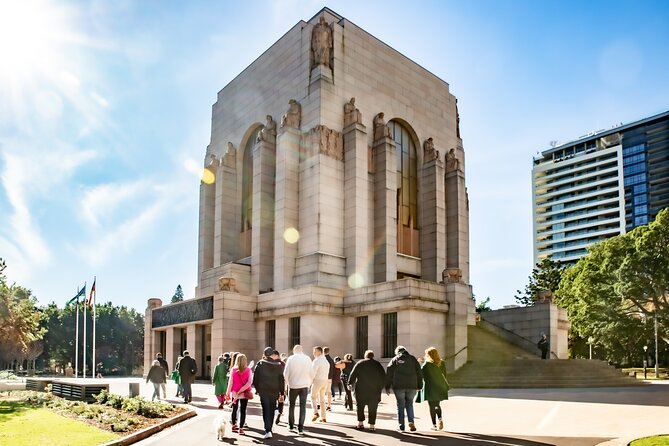
The ANZAC Memorial and the park pond add familiar landmarks to the opening section. The tour uses these places as reference points while moving toward a colder story: a murder case from the 1920s that remains unresolved. That gives you an early taste of the tour’s approach. The focus is not only on famous killers, but also on how a city remembers places where ordinary public life and serious crime crossed paths.
Hyde Park lasts around 30 minutes, and admission is free. You do not need to set aside extra time for an attraction ticket here. The value comes from the guide’s account and the connections between the places you are seeing.
More guided walks in Sydney:
- Sydney Opera House Official Guided Walking Tour
★ 4.5 · 3,770 reviews - Sydney The Rocks Guided Walking Tour
★ 5.0 · 1,546 reviews - Sydney: The Rocks 90-Minute History Walking Tour
★ 4.7 · 1,092 reviews
Entering Darlinghurst, once called East Sydney
After Hyde Park, the route moves into Darlinghurst, also known as East Sydney. This is where the tour becomes more concentrated. You’ll spend about an hour and a half on streets and laneways connected with crimes dating from 1860 to 1970.
Darlinghurst’s Victorian and Edwardian architecture gives the walk a strong visual setting. You are not simply moving from one crime story to another. You’ll be looking at older buildings and street patterns while hearing how the suburb changed over time.
The area was described as Australia’s most dangerous suburb between 1890 and 1960. That label reflects a long period rather than one short burst of violence. The tour places crime alongside slums, gang activity, prostitution, drug dealing, policing, and the pressure of a growing city.
That context is one of the experience’s best features. A list of sensational crimes can become thin very quickly, but the social details give the stories weight. You’ll hear about the conditions around the crimes and the types of people who occupied Darlinghurst’s streets, not just the names attached to individual cases.
Razorhurst and the old gangland streets
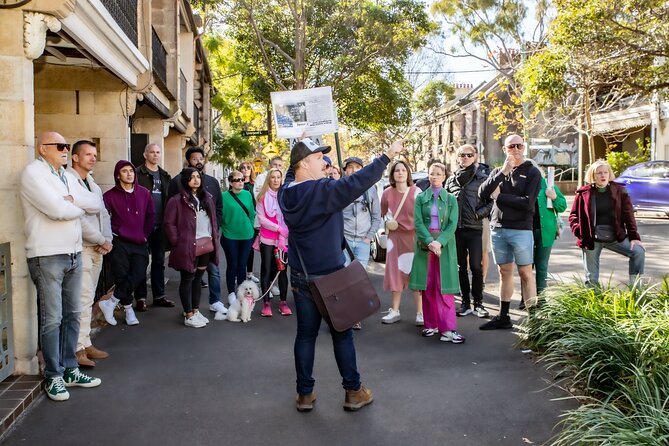
One of the tour’s most distinctive subjects is Razorhurst, the former nickname for part of Darlinghurst associated with gang fights. The name points to a rough period when rival groups battled in the streets and weapons were part of the area’s reputation.
You will not get the same story from a standard Sydney guidebook. Razorhurst gives the tour a local focus, showing how a small part of the city became associated with organized street violence and colorful criminal characters.
The appeal here is the connection between place and memory. Modern Darlinghurst is also known for nightlife, restaurants, old buildings, and the Sydney LGBT Mardi Gras. The tour lets you see how much the area’s public identity has changed, while still tracing the older streets where gang conflicts once took place.
This section may appeal most to visitors who enjoy urban history as much as crime. If you want only famous murder cases, some of the social background may feel like a detour. I see it as an advantage, since it explains why the neighborhood developed the reputation that made Razorhurst such a lasting name.
The old Sydney Gaol and the machinery of punishment
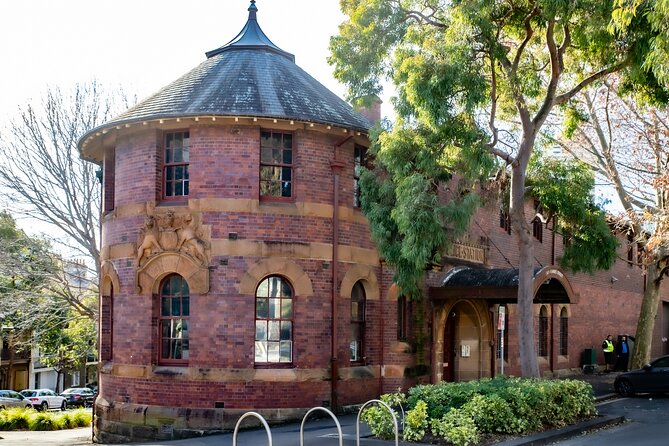
The former Sydney Gaol is one of the route’s strongest historical stops. Built by convicts in 1841, it brings the story inside the prison system and away from the street-level crimes of later Darlinghurst.
You’ll hear about inmates and hangmen, giving you a view of how colonial Sydney dealt with crime and punishment. The gaol helps connect the convict years with the later criminal history of East Sydney. It also shows that law enforcement and punishment were visible parts of the city’s growth from an early stage.
This stop is valuable because it gives the tour a longer time span. The route does not begin and end with twentieth-century murders. Instead, it moves from pre-colonial use of Hyde Park to convict labor, prison life, gang activity, and twentieth-century crime.
The building itself also adds atmosphere, though the tour information does not promise a separate interior visit or an admission entry. Think of this as an outdoor historical stop with stories tied to the former gaol, rather than a prison museum visit.
More ghost and true crime walks in Sydney:
- Sydney: True Crime Tour
★ 4.8 · 554 reviews - The Rocks Ghost Tours with Guide in Sydney
★ 4.5 · 482 reviews - Sydney Dark Stories True Crime Tour
★ 5.0 · 453 reviews - Sydney Ghost Walking Tour
★ 3.5 · 156 reviews
Police, courts, and the Parkland Killer
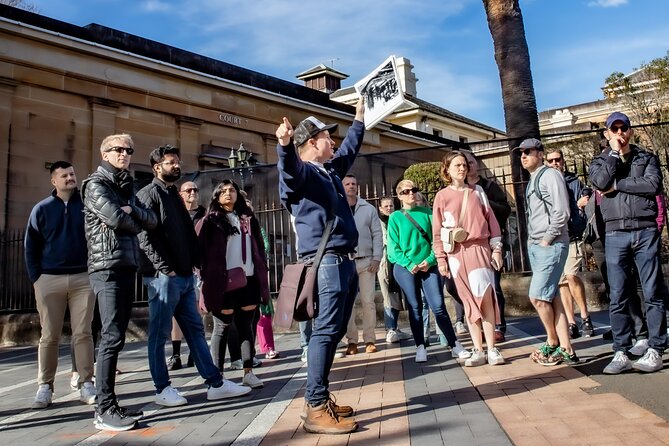
The next part of the route brings in the old police station and courthouse. These sites show the official side of the same story. After hearing about criminals, victims, and street gangs, you’ll see the places connected with policing and the courts.
The tour also identifies crime scenes connected with the Parkland Killer and the Mutilator Murders of the 1960s. These cases are among the darker parts of the walk. The guide’s role is important here because the experience depends on clear storytelling and careful links between the locations and the events.
Elliott is especially well suited to this format. The supplied tour details describe him as highly informed about both the murder stories and the broader history of East Sydney. His strength is not just recounting crime facts. He also explains the social changes from the convict years through the 1970s, which gives you a clearer sense of how the suburb developed.
Expect an entertaining presentation, but do not confuse entertaining with lighthearted. The guide uses engaging stories to keep the walk moving, while the subject matter remains serious. If murder details make you uncomfortable, you may want to ask yourself before booking how much crime-focused storytelling you enjoy.
Finishing at Kinselas Hotel and Taylor Square
The tour ends at Kinselas Hotel on Taylor Square, at 383 Bourke Street in Darlinghurst. This is an unusual final setting: the building began as a 1930s funeral parlor and has since become a bar.
Its past suits the tour’s mix of death, social change, and modern city life. You finish not at a museum or a grand monument, but at a place that has changed function while retaining a connection to the neighborhood’s older history.
Taylor Square also provides an important present-day reference. It is a well-known backdrop for Sydney’s LGBT Mardi Gras, linking the tour’s older stories with Darlinghurst’s modern public identity.
The ending is practical, too. Since you finish in Darlinghurst rather than returning to the starting point, you can continue exploring the area or stop nearby after the walk. The tour does not include a return transfer, so plan your day around ending at Taylor Square.
What the $24 price really gives you
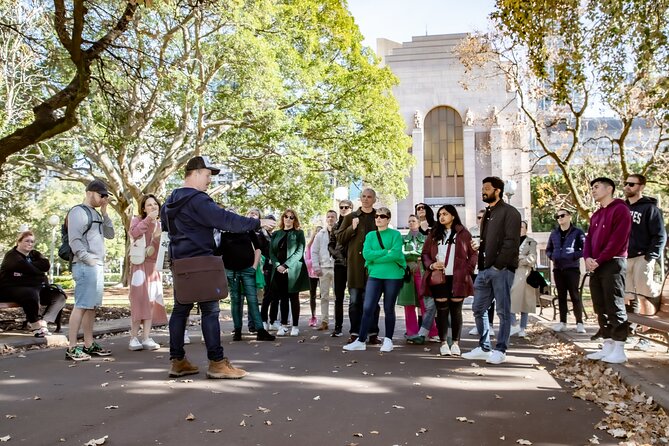
At $24, this is a low-cost guided experience for Sydney. You are paying for about two hours of local storytelling, not for entry to a major attraction or a vehicle-based tour.
That distinction matters. The value depends on how much you enjoy learning from a guide while walking through ordinary city streets. If you prefer museum displays, dramatic interiors, or included admission tickets, this may feel basic. If you like seeing the actual streets connected with a city’s past, the price is easier to justify.
I consider the combination of crime, architecture, and social history a good use of the fee. You get a focused introduction to Darlinghurst without committing half a day or paying for a larger attraction package.
The small group limit also helps. The maximum is 25 people, enough for a social atmosphere and the chance to meet others, but not so large that the walk automatically becomes a major crowd. The exact feel will depend on the booking size, but the cap gives you a reasonable expectation.
Walking effort, timing, and what to wear
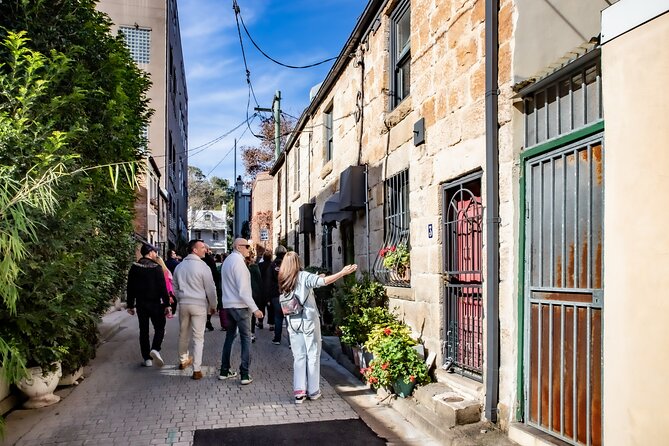
The tour lasts about two hours, with approximately 30 minutes in Hyde Park and 90 minutes in Darlinghurst. The walking distance is not extreme, according to the tour description, but you still need a moderate level of physical fitness.
You’ll move along streets and laneways, so comfortable shoes are sensible. The experience requires good weather, and poor conditions can lead to a new date or a full refund. Sydney sun can also be strong, so a hat, water, and weather protection are practical choices, even though they are not supplied as tour features.
The 11:00 am start gives you a useful middle-of-the-day option. You can visit another central attraction before or after, though you should allow time to reach the Museum meeting point and avoid arriving at the last minute.
A mobile ticket keeps the booking simple. Confirmation is provided at booking, and public transport is nearby. Service animals are allowed.
Who will enjoy this East Sydney walk
I would recommend this tour to you if you like city history with a darker edge. It suits visitors who want more than the Opera House, Harbour Bridge, and postcard views, especially if you are curious about how Sydney’s neighborhoods changed over time.
It is also a good choice for repeat visitors who have already seen the main sights. Darlinghurst’s architecture and street layout become more interesting when you know about the crime cases, police buildings, prison history, and gang conflicts connected with them.
The tour should suit solo visitors and couples who like meeting people in a group setting. The maximum of 25 makes it social, while the compact route avoids the demands of a full-day excursion.
I would be more cautious about booking it for young children or anyone sensitive to graphic crime themes. The descriptions include murder, mutilation, drugs, prostitution, and gang violence. The tour is educational, but the subject matter is not softened into a family sightseeing story.
Booking, cancellations, and weather concerns
You can cancel for a full refund if you do so at least 24 hours before the 11:00 am start time. Changes or cancellations inside that window are not accepted for a refund, and the local Sydney time applies.
Bad weather can also affect the walk. If the provider cancels because conditions are poor, you will be offered another date or a full refund. A minimum number of bookings is required, so a cancellation for low numbers also comes with the choice of another date or experience, or a full refund.
Those terms are fair for a walking activity, but they make it worth checking the forecast and your Sydney schedule before committing. If your visit is very short, avoid placing this tour on the final morning unless you have room to move it.
Should you book the Historical True Crime Walking Tour?
Book it if you want a reasonably priced, guide-led look at the parts of Sydney that do not appear on the usual sightseeing circuit. The strongest reasons are Elliott’s broad historical approach, the unusual Razorhurst stories, and the way the route links Hyde Park, the old gaol, police and court buildings, twentieth-century crime scenes, and Taylor Square.
Skip it if you dislike murder stories, need a fully accessible low-effort activity, or want included attraction entries and a polished bus tour. For most curious adults with moderate fitness, the $24 price, two-hour length, and central route make this a practical way to understand Darlinghurst beyond its modern cafes and nightlife.
FAQ
Where does the tour start?
The tour starts near the Museum in Sydney, NSW 2000. The listed start time is 11:00 am.
Where does the tour finish?
It finishes at Kinselas Hotel, 383 Bourke Street, Darlinghurst, on Taylor Square.
How long does the walking tour last?
The tour lasts approximately two hours.
How much time is spent in Hyde Park?
The Hyde Park section lasts about 30 minutes.
How much time is spent in Darlinghurst?
The Darlinghurst section lasts about one hour and 30 minutes.
What crime stories are included?
The tour covers a 1920s cold case murder, the Parkland Killer, the Mutilator Murders of the 1960s, and older gang conflicts in Razorhurst.
Does the tour cover Sydney’s convict history?
Yes. You’ll hear about Aboriginal use of Hyde Park before colonization, the convict period, and the former Sydney Gaol built by convicts in 1841.
Who leads the tour?
The guide is Elliott. The tour focuses on his account of East Sydney’s crime and social history.
How many people can join the group?
The maximum group size is 25 travelers.
Is cancellation free?
You can receive a full refund if you cancel at least 24 hours before the experience starts. Poor weather or failure to meet the minimum number may also lead to a new date or a full refund.
More History and Heritage Trips in Sydney
- Sydney The Rocks Historical Pub Tour
★ 5.0 · 251 reviews - Sydney Convicts, History & The Rocks 2.5-Hour Walking Tour
★ 4.9 · 181 reviews - Private Tour in Sydney to Bondi and Historical Site
★ 5.0 · 50 reviews - Sydney Photography Course in the Historic Rocks Area
★ 5.0 · 35 reviews
Newest Sydney write-ups
- Sydney: “Vivid Sydney” Festival of Light Sightseeing Cruise★ 4.3 · 24 reviews
- Private Transfer from Sydney Airport to Sydney (CBD)Hotel or Port★ 4.5 · 24 reviews
- Sunset Harbour Bridge Kayak Escape★ 5.0 · 8 reviews
- Whale Watching Sailing Experience in Sydney★ 5.0 · 28 reviews
- Wine Tours Sydney – Southern Highlands Day Escape, Full Day Wine Tasting Tour★ 5.0 · 9 reviews
- Private Wildlife Waterfalls and Wine Day Tour from Sydney★ 5.0 · 6 reviews
- Whale Watching Sydney★ 3.5 · 17 reviews
- Sydney Harbour Tall Ship Whale & Sail – Whale Watching Cruise★ 5.0 · 5 reviews
Sydney Ghost & True Crime Tours, compared.
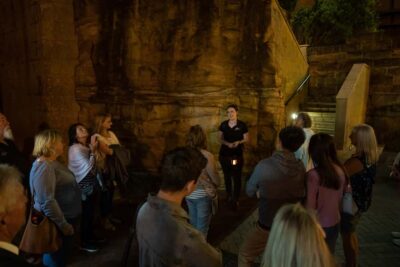

Sydney Ghost Quest: Self-Guided Haunted History Game
Read our review →
Ghosts, Grog & The Rocks: Haunted Pubs &Cellar Tour
Read our review →Browse the lists this tour appears in