
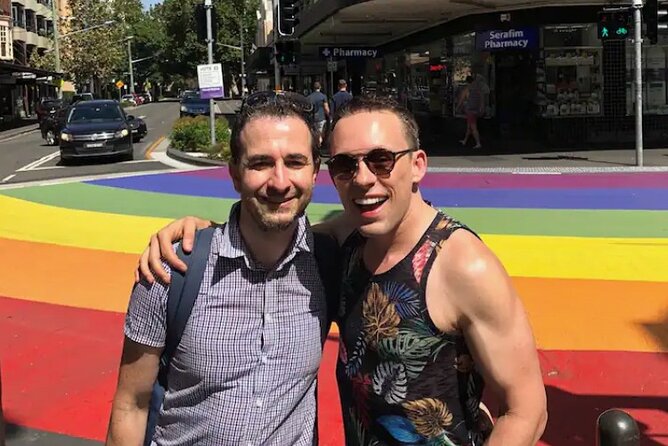
Reviewed · SYDNEY WALKING TOURS
Sydney Queer Walking Tour
Sydney’s queer story is not confined to one street or one famous parade. This two-hour walk connects colonial-era accounts, Indigenous perspectives on sexual and gender diversity, 1970s activism, the first Mardi Gras, and the HIV epidemic through a route from central Sydney to Darlinghurst. Guide Michael brings the subject to life with clear storytelling and a lively pace.
I like the compact group, capped at 12 people, and the thoughtful route from the Archibald Memorial Fountain to Taylor Square. I also like that the walk includes a coffee or tea stop at a local café, giving you a short breather between serious subjects. The main consideration is that this is a history-focused walk, not a broad sightseeing tour, so it suits curious adults more than anyone seeking a long list of major landmarks.
Key points at a glance
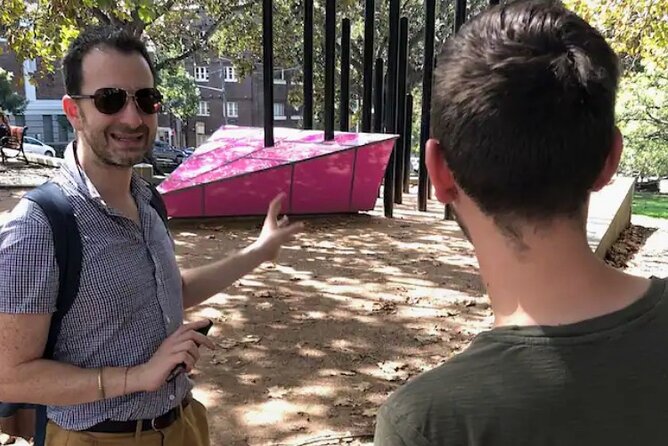
- Colonial stories begin at Archibald Memorial Fountain: The opening stop looks at queer lives and identities that were often left out of official accounts.
- Whitlam Square marks the 1970s shift: You’ll examine how gay rights campaigns began pressing for fairness and equality, including the role of the media.
- Darlinghurst brings the HIV era into focus: Green Park provides space to consider how Sydney dealt with the epidemic and its wider social impact.
- Taylor Square links protest and celebration: The final stop examines the first Mardi Gras in June 1978 and why the site still matters.
- Small groups keep the discussion personal: The maximum group size is 12, useful for a subject that benefits from questions and conversation.
- The route ends in the heart of gay Sydney: The finish at Taylor Square places you near Oxford Street, with easy access to the Sydney Sustainable Markets.
Why Sydney’s queer past needs a walking tour
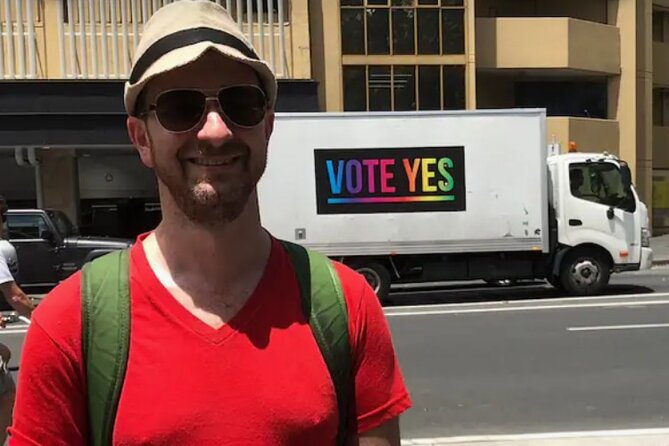
Queer history can be difficult to see in the usual city tour format. There may be no grand monument, preserved building, or obvious plaque to mark the people and events that shaped a community. This walk uses places in everyday Sydney to show how those stories fit into the city around you.
The opening discussion reaches back to Indigenous Australia and considers what is known about diverse sexual orientations and genders before turning to the colonial period. From there, the tour follows the changing social and political climate into the early 20th century and the reforms that came to public attention from the 1970s onward.
That broad time span is one of the tour’s best features. You are not given a single polished story of progress. Instead, you get a look at people whose lives were often kept out of public records, followed by the protests, political work, parties, and public-health struggles that reshaped Sydney.
The subject matter is serious, but the walk also reaches the cultural side of queer Sydney. Mardi Gras is treated not simply as a parade, but as an event with roots in protest and a lasting role in the city’s identity.
More guided walks in Sydney:
- Sydney Opera House Official Guided Walking Tour
★ 4.5 · 3,770 reviews - Sydney The Rocks Guided Walking Tour
★ 5.0 · 1,546 reviews - Sydney: The Rocks 90-Minute History Walking Tour
★ 4.7 · 1,092 reviews
Starting at Archibald Memorial Fountain
The walk begins at the Archibald Memorial Fountain at 9:30 am, after meeting at the Law Courts Library, 184 Phillip Street. This first location is used to introduce the idea of hidden queer histories, particularly from colonial times through the 1970s.
You’ll hear about what is known of Indigenous approaches to sexual and gender diversity, then move into the circumstances faced by queer people during the colonial period and the early 20th century. Because much of this material is not displayed openly around the city, the guide’s explanation is central to the experience.
I like beginning here rather than jumping straight to Oxford Street. It gives you a wider frame before the walk reaches the better-known places associated with modern queer Sydney. The fountain itself is not presented as a queer monument, so you should expect the meaning to come through the interpretation, not through a dedicated exhibit.
Plan on about 30 minutes at this stop. That is enough time for an introduction without using up the morning before the walk reaches Darlinghurst.
Whitlam Square and the start of public protest
The second stop is the Emden Gun at Whitlam Square, where the conversation turns to the 1970s. This is the point at which the tour examines the beginning of the gay rights era and the push for fairness and equality.
The stop also looks at the part played by the media. That detail matters because social change does not happen only through marches and legislation. Public attention, newspaper coverage, and the way queer people were portrayed all affected how these issues entered mainstream discussion.
You’ll spend about 30 minutes here. The location provides a useful pause between the older stories at the fountain and the more recent events that shaped Darlinghurst. It also helps explain why the first Mardi Gras was connected to a larger period of social upheaval rather than appearing as an isolated celebration.
This section should appeal to you if you like understanding how movements develop. It is less about ticking off a sight and more about following the link between public debate, activism, and changing attitudes.
Walking through Darlinghurst to Green Park
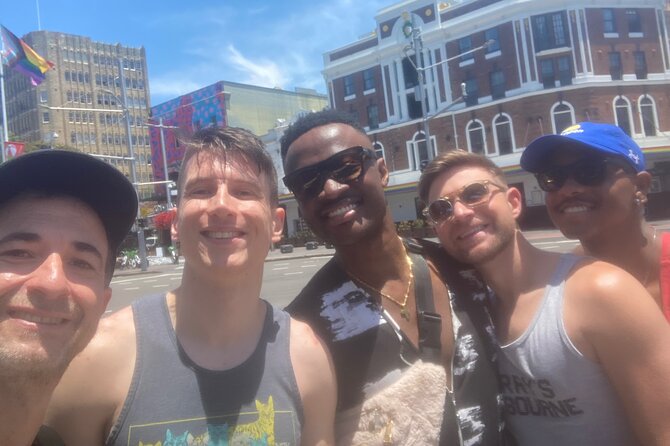
After Whitlam Square, the route winds through Darlinghurst’s backstreets toward Green Park. This is the most flexible part of the walk, since you are moving through the neighborhood rather than remaining at one single landmark.
A coffee or tea stop at a local café is included along the way. It is a small but useful touch. The walk deals with painful and complex subjects, so a chance to pause with a drink can help you absorb what you have heard before the next section.
At Green Park, the focus turns to the HIV epidemic and the way Sydney handled it. The discussion places the health crisis within the broader story of queer activism, community life, and social change. This part gives the tour emotional weight, but the available information does not suggest that it is designed as a memorial visit or a dedicated museum presentation.
You’ll spend roughly 30 minutes at Green Park. The park setting may make this a more relaxed place for discussion, though you should still expect a serious topic rather than a simple rest stop.
For me, this is where the tour’s chronological structure pays off. You have already considered hidden histories and 1970s activism, so the HIV discussion becomes part of a continuing story about public recognition, community response, and the fight for fair treatment.
More walking tours in Sydney:
- From Sydney: Blue Mountains Tour with Waterfall Walk & Lunch
★ 4.8 · 2,400 reviews - Blue Mountains Small Group Tour with Waterfall Walk & Fresh Lunch
★ 5.0 · 628 reviews - Sydney Cricket Ground (SCG) and Museum Walking Tour
★ 4.9 · 616 reviews - Behind The Scenes: Sydney Cricket Ground (SCG) Guided Walking Tour
★ 5.0 · 581 reviews
Taylor Square and the first Mardi Gras
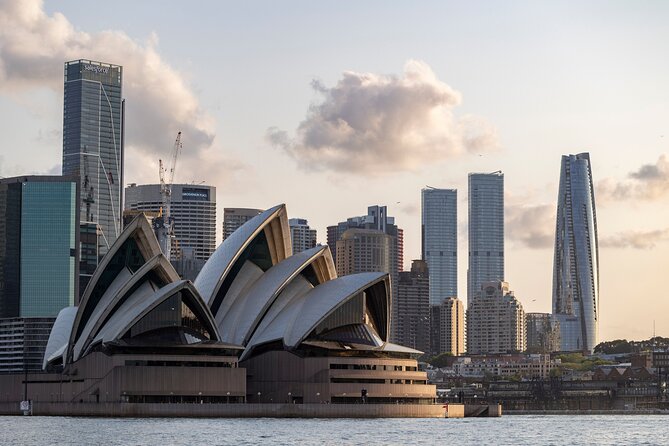
The final stop is at Kinselas Hotel and Taylor Square, at the intersection of Oxford Street and Bourke Street. This is the heart of gay Sydney and the natural place to finish a walk about protest, celebration, and public identity.
Here, the guide discusses what happened in June 1978 at the first Mardi Gras and why that event still carries meaning for queer Sydney. The conversation also considers how the parade and its surrounding culture have changed over the decades.
You’ll have about 30 minutes at this stop. The location gives the tour a strong ending because Taylor Square is not just a place connected with Mardi Gras. It also shows you the continuing public presence of queer Sydney in a neighborhood known for that connection.
The endpoint is the Sydney Sustainable Markets at Taylor Square, so you can continue exploring after the tour. That is handy if you want to browse the area, find something to eat, or simply spend more time around Oxford Street. The official finish is not back at the starting point, so plan your day around a one-way walk.
What the small group adds
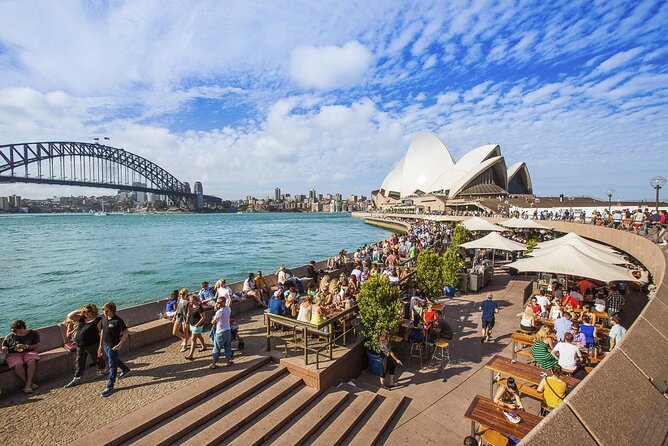
The group is limited to 12 people. For a walking tour built around stories and discussion, that is a useful limit. You are less likely to feel lost in a crowd, and it should be easier to hear the guide and ask a question when a subject catches your attention.
The tour’s only published participant feedback praises Michael for keeping the group engaged throughout an informative history walk. That fits the design of the experience: it depends heavily on spoken explanation, not on large attractions or visual displays.
A small group does not guarantee a private tour, so you should still expect to share the experience with other people. But the cap makes this a better choice than a large coach-style outing if you want a closer connection with the guide.
Price, timing, and practical value
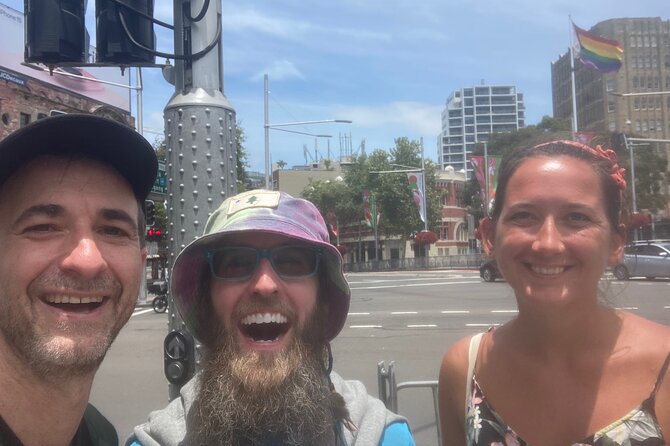
The price is $53.79 per person for about two hours. That is not the cheapest way to spend a morning in Sydney, especially since admission to the listed stops is free. The value comes from the research, structure, and interpretation that connect ordinary public places into one coherent story.
I would judge the price by your interest in the subject. If you already know Sydney’s queer history and mainly want photographs of Oxford Street, you may find the cost harder to justify. If you want context that you would be unlikely to pick up by walking through the city alone, the fee makes more sense.
The start time is 9:30 am, which leaves much of the day free. The route begins in central Sydney and ends in Darlinghurst, so you are not spending time retracing your steps. The walk lasts about two hours, with each of the four main stops taking roughly 30 minutes.
Wear comfortable shoes and be prepared for a walking route through city streets and backstreets. The exact amount of walking between stops is not specified, but the experience is clearly built around moving from the Law Courts area toward Taylor Square.
A mobile ticket is provided, and confirmation arrives at booking. Service animals are allowed, public transport is nearby, and most people can participate. The published information does not give a detailed accessibility description, so contact the operator if you need specific information about surfaces, seating, or walking distances.
Who should book this experience
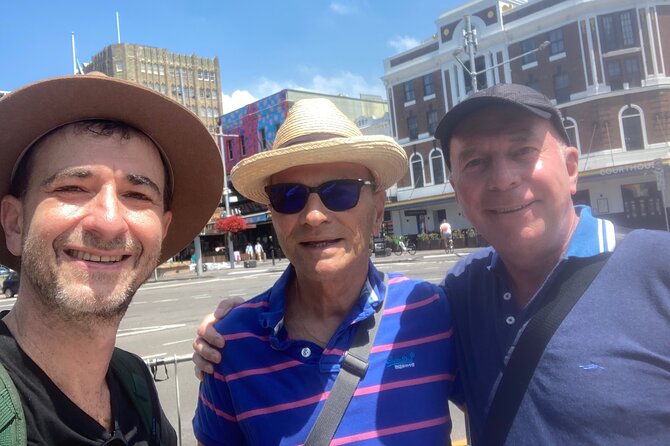
I would choose this walk if you want history with a clear social and political thread. It suits visitors who are interested in Sydney beyond its harbor views, beaches, and colonial landmarks, and it gives queer visitors and allies a way to understand the city through its LGBTQ past and present.
It is also a good fit if you prefer a focused morning activity. Two hours is long enough to develop a subject, but short enough to combine with other plans. The café pause helps break up the route, and the endpoint at Taylor Square makes it easy to continue around Darlinghurst afterward.
You may want to skip it if you dislike discussion-heavy tours or want an outing built around interiors and formal exhibits. There is no indication of museum entry, special access, or a large collection of objects. The main material is the city itself, brought together by the guide’s storytelling.
Families and mixed-age groups should also consider the subject matter. The tour covers discrimination, protest, and the HIV epidemic, so it is best for people comfortable with mature historical themes.
Booking and cancellation details
You can cancel for a full refund up to 24 hours before the experience begins. Cancellations or changes made less than 24 hours before the start time are not accepted for a refund.
The meeting point is the Law Courts Library, 184 Phillip Street, Sydney NSW 2000. The walk ends at the Sydney Sustainable Markets at Taylor Square, on Oxford Street at Bourke Street in Darlinghurst.
Because the group is capped at 12 and there have been bookings recently, I would reserve ahead if your schedule is tight. The tour has a current rating of 5 from six submitted reviews, with particular praise for the informative, lively presentation by Michael.
Should you book the Sydney Queer Walking Tour?
Book it if you want a thoughtful account of Sydney’s queer past, from Indigenous perspectives and colonial-era stories to 1970s activism, the first Mardi Gras, and the HIV epidemic. The small group, local café stop, and one-way route to Taylor Square add practical value.
Skip it if you want a general city sightseeing walk or a parade-focused experience with little historical discussion. For the right audience, the $53.79 fee pays for context you would not get from simply strolling Oxford Street. Bring comfortable shoes, an open mind, and time to continue exploring Darlinghurst after the final stop.
FAQ
Where does the Sydney Queer Walking Tour begin?
It begins at the Law Courts Library, 184 Phillip Street, Sydney NSW 2000, Australia.
What time does the tour start?
The tour starts at 9:30 am.
Where does the tour finish?
It finishes at the Sydney Sustainable Markets at Taylor Square, on Oxford Street at the intersection with Bourke Street in Darlinghurst.
How long does the tour last?
The tour lasts approximately two hours.
What group size should I expect?
The tour has a maximum of 12 participants.
Is a mobile ticket available?
Yes. The experience provides a mobile ticket, and confirmation is received at the time of booking.
Can I cancel for a full refund?
Yes. You can cancel at least 24 hours before the start time for a full refund. Cancellations and changes made less than 24 hours before the start time are not accepted.
Newest Sydney write-ups
- Sydney: “Vivid Sydney” Festival of Light Sightseeing Cruise★ 4.3 · 24 reviews
- Private Transfer from Sydney Airport to Sydney (CBD)Hotel or Port★ 4.5 · 24 reviews
- Sunset Harbour Bridge Kayak Escape★ 5.0 · 8 reviews
- Whale Watching Sailing Experience in Sydney★ 5.0 · 28 reviews
- Wine Tours Sydney – Southern Highlands Day Escape, Full Day Wine Tasting Tour★ 5.0 · 9 reviews
- Private Wildlife Waterfalls and Wine Day Tour from Sydney★ 5.0 · 6 reviews
- Whale Watching Sydney★ 3.5 · 17 reviews
- Sydney Harbour Tall Ship Whale & Sail – Whale Watching Cruise★ 5.0 · 5 reviews
Sydney Walking Tours, compared.
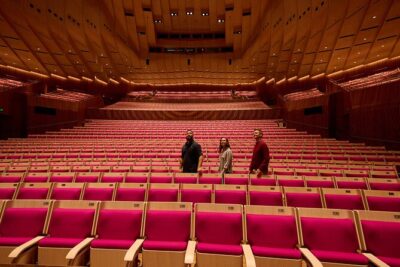
Sydney Opera House Official Guided Walking Tour
Read our review →
Sydney Cricket Ground (SCG) and Museum Walking Tour
Read our review →
Behind The Scenes: Sydney Cricket Ground (SCG) Guided Walking Tour
Read our review →
Ultimate Sydney Walking Tour (Small-Group, Drink Included)
Read our review →
Convicts and The Rocks: Sydney’s Walking Tour Led by Historian
Read our review →Browse the lists this tour appears in